

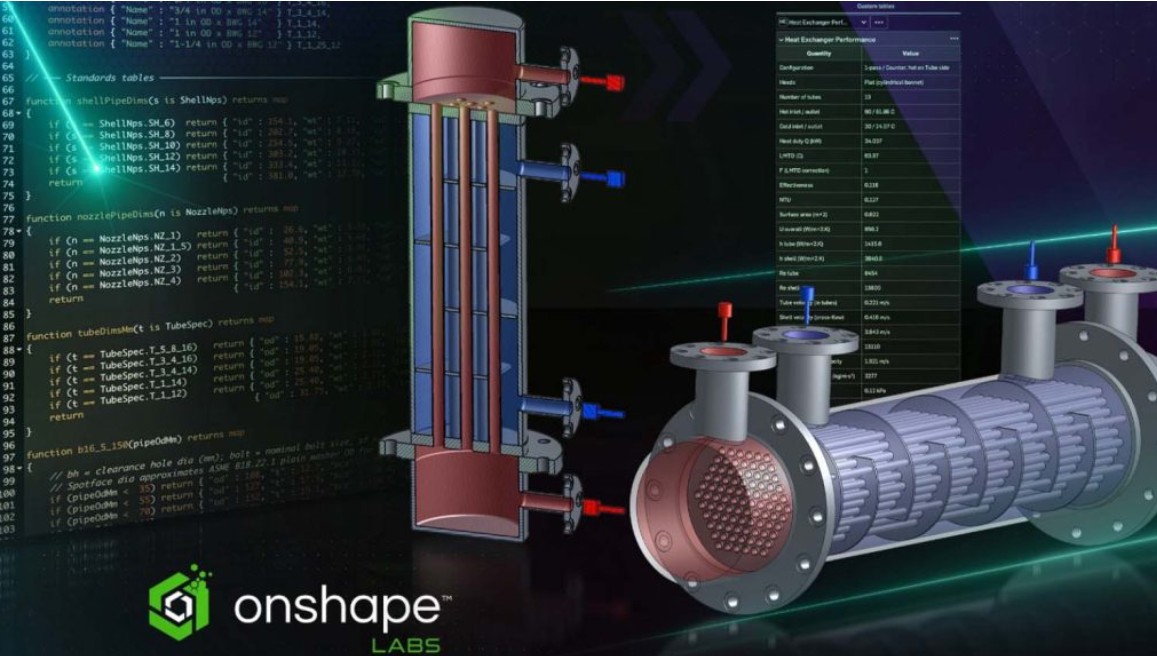
PTC has introduced the FeatureScript MCP Server for Onshape, giving engineers a faster way to create custom CAD features with natural language and AI. Released through Onshape Labs, the capability allows users to describe the functionality they need while AI helps write, test, debug, and refine the necessary FeatureScript code, tells Develop 3D.
The approach could make CAD customization accessible to engineers who do not have extensive programming experience. Companies can use it to automate repetitive design tasks, develop tools suited to established workflows, and capture engineering knowledge in reusable features. Examples include tools for creating complex helixes from standard definitions and automating grid patterns and support structures for products such as wire shelving and sink racks.
FeatureScript is the programming language Onshape uses to build its own CAD features. The new server connects FeatureScript with coding-focused large language models, including ChatGPT, Claude, and Gemini, through the Model Context Protocol. Its key advantage over simply asking an AI model to generate FeatureScript is its ability to insert code, test the resulting feature, evaluate its output, and rewrite the code when necessary.
The system also includes persistent memory. It can record previous interactions, errors, and solutions, helping the AI avoid repeating mistakes and improve its performance over time.
FeatureScript MCP can go beyond creating individual CAD functions. PTC demonstrated a shell-and-tube heat exchanger containing 267 parts that was generated without manual sketching. The model also included a cut list, weld schedules, and reporting tables. Users can provide images, PDFs, engineering standards, and company guidelines to improve the initial results.
PTC sees this workflow as an alternative to straightforward text-to-CAD generation. Instead, its strategy centers on text-to-code-to-CAD, where AI turns engineering requirements into reusable tools that can support company-specific products and processes.
