

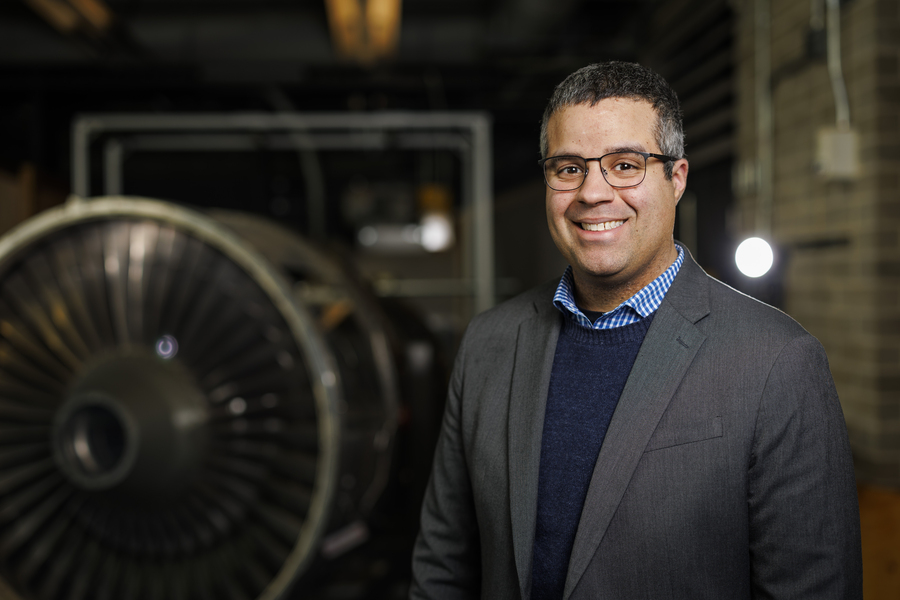
A growing reliance on satellites has quietly transformed low-Earth orbit into a crowded and increasingly fragile environment. The article from MIT News highlights the work of aerospace engineer Richard Linares, who is tackling space traffic as a complex engineering challenge rather than a purely regulatory one.
Satellites underpin everyday services, from communication and navigation to climate monitoring. Their rapid growth, however, has created a dense orbital ecosystem. More than 10,000 active satellites now operate in low-Earth orbit, alongside thousands of defunct spacecraft and over 100 million fragments of debris. This accumulation raises the risk of collisions and forces engineers to reconsider how much traffic space can safely sustain.
Linares leads MIT’s Astrodynamics, Space Robotics, and Controls Lab, where researchers apply orbital mechanics to track objects and predict how congestion will evolve. Their tools simulate millions of objects and assess collision risks, particularly as large satellite constellations expand. The work reframes orbital capacity as a measurable limit, similar to infrastructure constraints on Earth.
The research also extends beyond tracking. Linares and his team examine how space weather and even climate change can influence orbital conditions, potentially reducing the number of satellites that can operate safely. These factors introduce long-term uncertainties that traditional satellite planning has not fully addressed.
A key direction is autonomy. As congestion increases, satellites will need to make faster decisions without constant human control. Linares is exploring artificial intelligence systems that allow spacecraft to adapt, navigate, and respond to hazards in real time.
The broader implication is clear: space is no longer an open frontier with unlimited capacity. Managing orbital traffic now requires a combination of engineering models, autonomous systems, and societal decisions about the value of expanding satellite networks. The challenge is not just technical but strategic, shaping the sustainability of space infrastructure for decades to come.
