

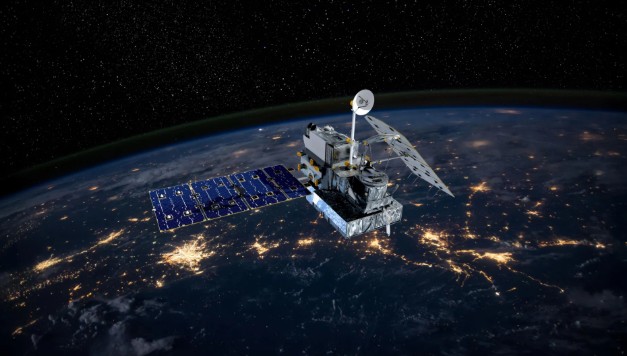
The rapid growth of artificial intelligence is driving unprecedented demand for computing power, prompting companies to explore unconventional solutions to expand data center capacity. One of the most ambitious concepts is the orbital data center, a space-based computing facility powered by solar energy. While companies such as SpaceX are advancing this vision, researchers caution that transforming orbit into a viable computing platform presents formidable engineering and operational challenges.
Like their terrestrial counterparts, orbital data centers require three essential resources: power, cooling, and physical infrastructure, tells Science Daily. In space, electricity would come from solar panels that receive abundant sunlight without interference from clouds. However, solar cells convert only a portion of incoming sunlight into electricity, and Earth’s shadow periodically interrupts power generation depending on the satellite’s orbit. The facilities would also require extensive communication systems to transmit data between Earth and orbit.
Cooling presents an even greater challenge. Although space is extremely cold, it lacks air to carry heat away from electronics. Instead, excess heat must dissipate through infrared radiation, a relatively slow process that requires enormous radiators. A data center producing 10 megawatts of waste heat could need radiator surfaces covering an area comparable to two football fields, significantly increasing the spacecraft’s size and complexity.
Space-based facilities could eliminate several concerns associated with Earth-based data centers, including competition for land, water, electricity, and community acceptance. However, these benefits are offset by new risks, including radiation damage, micrometeorites, orbital debris, and the enormous cost of launching and assembling large computing systems in space. Regular hardware upgrades, routine on Earth every three to five years, would also become far more difficult and expensive.
Researchers believe orbital data centers are unlikely to replace conventional cloud infrastructure in the near future because many applications require low-latency communication with users on Earth. Instead, their earliest and most practical role may be supporting space-based operations, such as processing satellite imagery, military and scientific data, and onboard computing for spacecraft.
Ultimately, orbital data centers represent an intriguing engineering frontier. While advances in launch systems and in-space manufacturing may gradually improve their feasibility, overcoming challenges related to power generation, thermal management, maintenance, and economics will determine whether they become a practical extension of the global computing infrastructure.
