

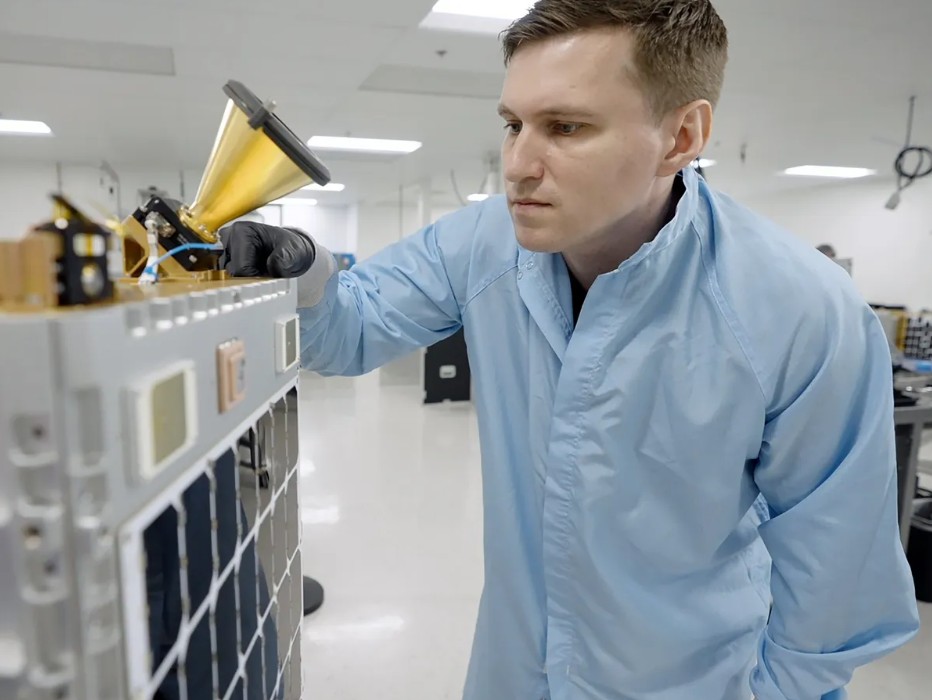
A new venture is preparing to send NVIDIA’s flagship H100 GPU into orbit, marking a bold move toward space-based cloud computing, tells IEEE Spectrum. The GPU will fly aboard a satellite built by Starcloud, backed by the NVIDIA Inception program, to create data centers beyond Earth’s surface. According to the company, the vacuum of space offers unique advantages for power and cooling. Solar panels operating above the atmosphere can capture unfiltered sunlight, and the cold of space can serve as a natural heat sink, enabling potentially massive reductions in energy and water usage.
Starcloud plans to launch its first GPU-equipped satellite later in 2025, with the intention of deploying increasingly capable platforms over the coming years. One target is a gigawatt-class orbital data platform that handles large-scale AI workloads, potentially freeing on-earth infrastructure from constraints of grid power, cooling, and land use.
From an engineering and infrastructure perspective, the project raises significant challenges. Launch costs remain high, radiation shielding is required, and reliability in orbit is still unproven. Yet the payoff could be transformative: faster data-processing for satellite imagery, AI inference conducted in-orbit, and infrastructure freed from terrestrial limits. The article frames this as more than novelty, a potential paradigm shift in how we build and locate compute resources.
For engineering professionals covering AI hardware, edge data, or sustainable infrastructure, the move underscores the growing interplay between GPU performance (as embodied by H100) and new deployment environments. The article suggests that accelerating capabilities of GPUs such as the H100 now extend beyond data centers into space-based architecture.
