

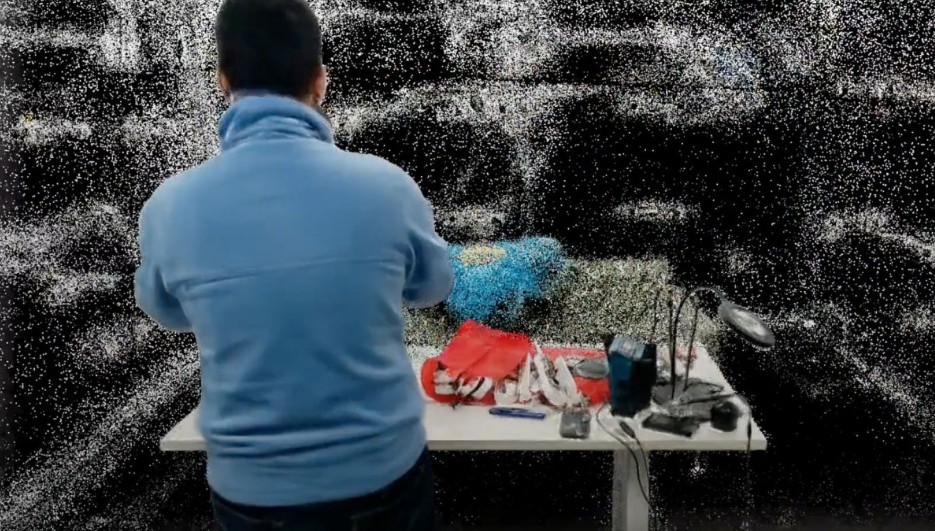
Volumetric video has long been viewed as one of the most promising technologies for immersive digital experiences, allowing viewers to observe a scene from virtually any angle rather than being limited to a fixed camera perspective. However, the enormous storage and bandwidth requirements of this format have prevented it from becoming widely accessible. Researchers at Brown University have now developed a new technique that could help overcome those barriers. Called PackUV, the method compresses complex volumetric video data into formats compatible with existing internet video infrastructure, potentially bringing immersive 3D experiences to ordinary computers and smart televisions.
Volumetric video is created by capturing a scene with multiple synchronized cameras positioned around the subject. Computer algorithms then reconstruct the environment in three dimensions, producing what researchers describe as a four-dimensional representation that combines 3D space with time. The resulting experience enables viewers to navigate freely within a scene, whether watching a sporting event from the field, exploring a concert stage, or viewing action from otherwise impossible camera positions.
One of the biggest obstacles has been the sheer size of the data. A 30-minute volumetric recording can require terabytes of storage and relies on formats that are difficult to integrate with existing streaming systems. The Brown team’s PackUV approach addresses this challenge by transforming volumetric data into a conventional video format that can be compressed, stored, and streamed using standard codecs already employed across the internet.
The researchers also tackled another persistent problem: accurately tracking dynamic objects over long sequences. By dividing recordings into smaller segments and improving object tracking between them, PackUV maintains visual quality while reducing computational demands.
Beyond entertainment, the technology could have applications in manufacturing, digital twins, education, and remote collaboration. By making volumetric video easier to distribute and view, PackUV represents a significant step toward turning immersive 3D media from a specialized research tool into a practical technology for everyday use.
