

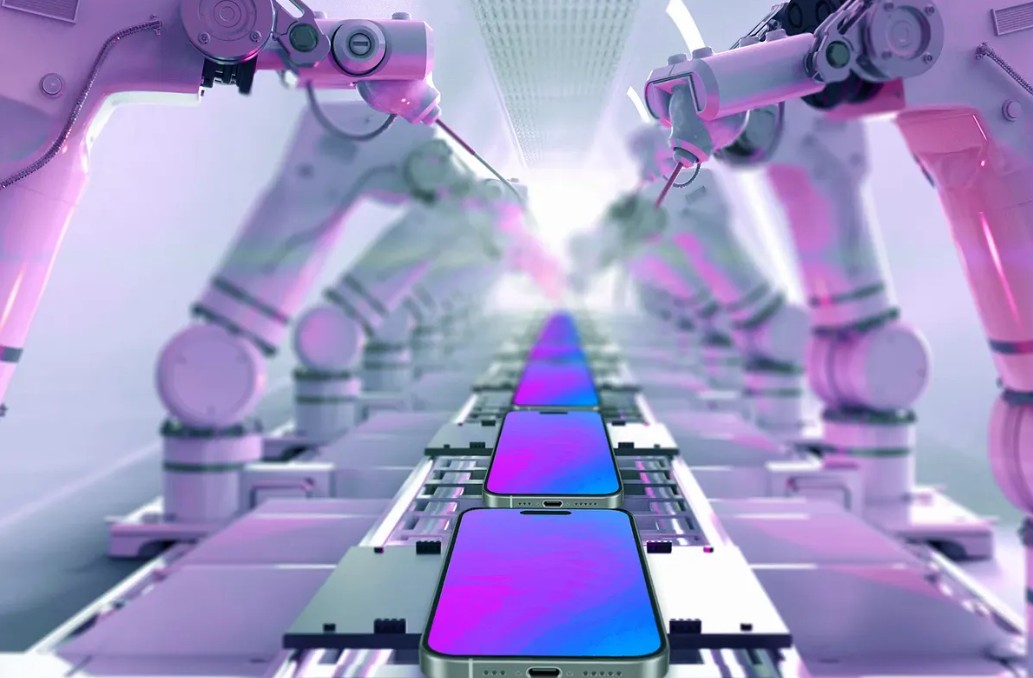
Physical AI could address one of factory automation’s persistent problems: automated equipment is highly effective at repetitive tasks but difficult to reuse when products change. Hardware FYI explores whether machines that sense conditions, act, and adapt could make assembly systems more flexible.
Physical AI is described as nondeterministic software operating within a machine’s control loop. Instead of executing the same predetermined sequence, a system can observe its environment, take an action, evaluate the outcome, and adjust its behavior. Applying this capability to manufacturing could help factories move beyond automation designed around individual products.
The challenge is particularly visible in assembly. Manufacturers have automated individual processes for decades, but equipment developed for one product often cannot be economically adapted to another. Apple’s manufacturing experiments illustrate the limitation. A robot designed to polish the cylindrical 2013 Mac Pro could not be repurposed to polish the first Apple Watch, leaving that task to human workers.
The article highlights an argument from WattFactory that reusable automation requires more than smarter robots. Assembly systems need a standardized architecture in which common hardware and software modules can be rearranged as manufacturing requirements change. Instead of rebuilding an automated line for every new product, manufacturers could reconfigure existing components.
Such an approach would extend the flexibility already available in part production to assembly. Yet assembly presents a more complicated engineering problem because it requires coordination among machines, fixtures, tools, material-handling equipment, and manufacturing processes.
Physical AI could provide the adaptive intelligence needed to make these standardized systems practical. The larger opportunity is not simply creating robots capable of performing more tasks. It is developing factory architectures that allow automation investments to survive product changes, making flexible, reusable assembly a realistic manufacturing strategy.
