

Physics-informed artificial intelligence (AI) is transforming engineering simulation by incorporating physical principles into machine learning models. An article by Neural Concept examines how this approach accelerates product development while addressing the limitations of traditional computational methods.
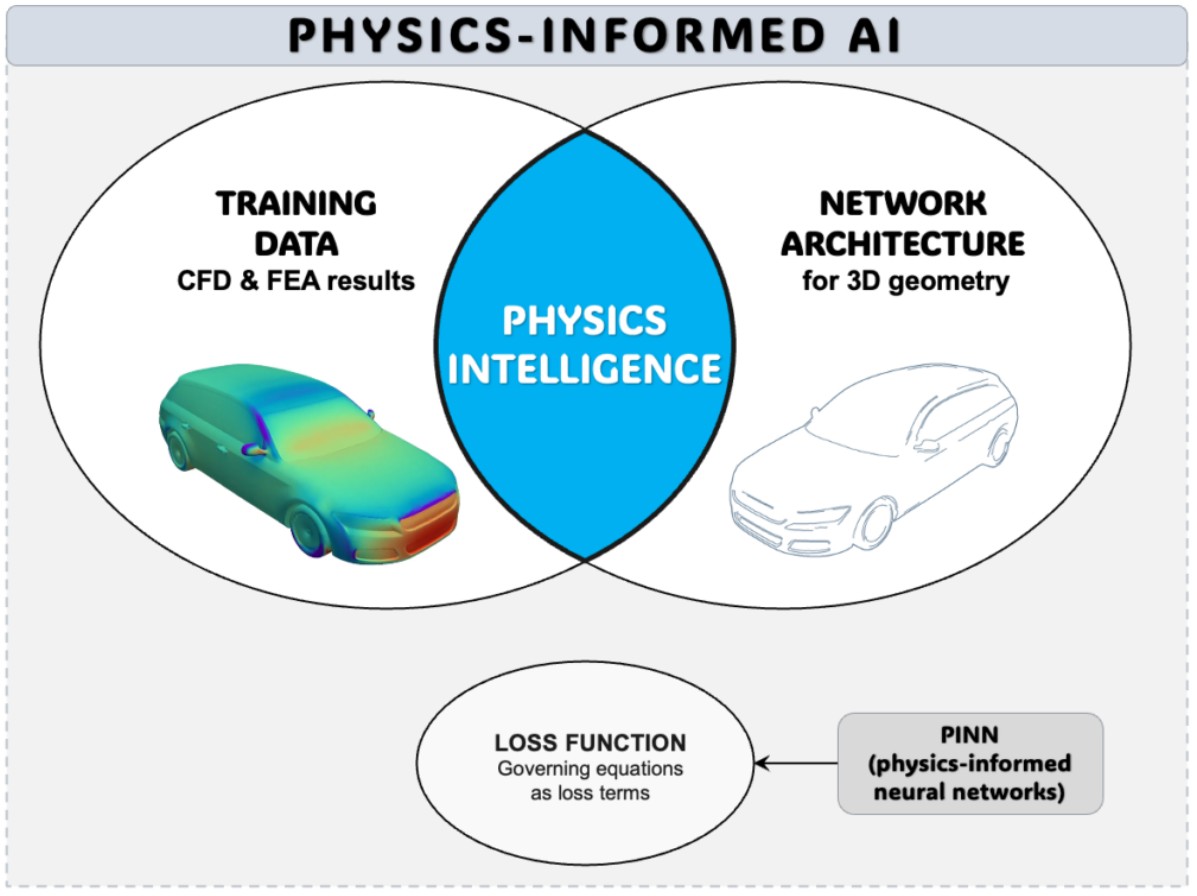
Physics-informed AI integrates scientific knowledge through three approaches: observational bias, which uses simulation data; inductive bias, which embeds physical constraints into neural network architectures; and learning bias, which incorporates governing equations into training objectives.
Models trained on computational fluid dynamics (CFD) and finite element analysis (FEA) results can predict pressure, stress, and other performance characteristics for new geometries in near-real time. This enables engineers to evaluate numerous design alternatives without repeatedly running expensive simulations.
However, these models remain reliable primarily within their training data’s geometric range. Conventional numerical solvers remain essential for validating selected designs and evaluating unfamiliar configurations. Physics-informed neural networks also face training difficulties when handling complex physical problems.
Neural Concept proposes integrating three complementary capabilities through its Engineering Intelligence platform. Geometry Intelligence supports CAD understanding, shape modification, and design preparation. Physics Intelligence predicts performance and enables optimization. Program Intelligence incorporates manufacturing constraints, engineering requirements, and previous design decisions.
The platform connects CAD, CAE, and product lifecycle management (PLM) systems, allowing AI agents to support engineering workflows while retaining human oversight.
Industrial applications demonstrate the technology’s potential. MAHLE explored more than 30 million virtual blower designs, developing a product approximately 15% more efficient and 4 dB quieter than comparable systems. General Motors uses AI models trained on crash simulation data to accelerate pedestrian safety assessments.
Despite these advances, preparing geometries, managing simulation data, and making engineering decisions remain significant bottlenecks.
The article concludes that physics-informed AI delivers greater value when integrated with geometry processing, engineering knowledge, and validated simulation workflows rather than functioning solely as a faster numerical solver.
