

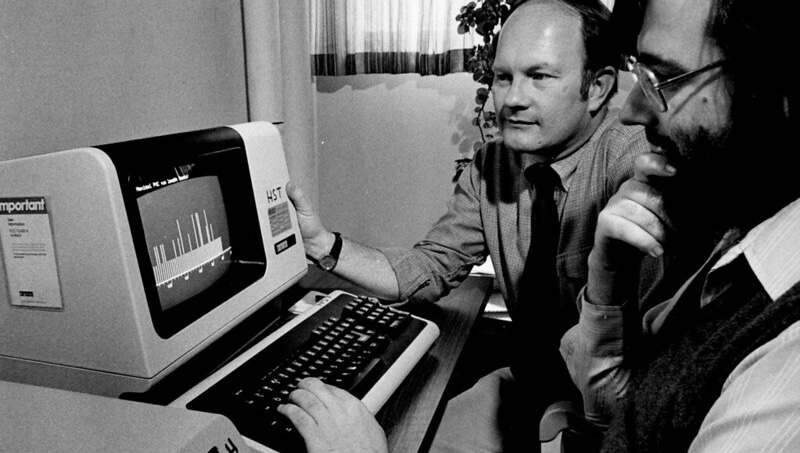
Long before cloud-based scientific collaboration became routine, medical researchers struggled to access and share clinical data. In 1975, researchers at MIT and Boston’s Beth Israel Hospital began addressing this problem by collecting and digitizing electrocardiogram recordings for both their own studies and the broader research community, tells MIT News.
The team built computers, duplicated magnetic tapes individually, and created more than 100,000 annotations. By 1980, the database was ready for distribution. What researchers initially expected to share with fewer than a dozen groups eventually attracted much wider interest.
Those early records became the first database on PhysioNet, a platform established in 1999 through the Harvard-MIT Program in Health Sciences and Technology. Its distribution methods evolved from magnetic tapes to CD-ROMs, FTP servers, and online access. Today, PhysioNet hosts hundreds of databases and ranks among the most comprehensive repositories of biomedical and clinical data. More than 15,000 scientific publications cited the platform last year, while users from over 180 countries have registered.
PhysioNet also helped establish a new model for open scientific collaboration. Its Medical Information Mart for Intensive Care, or MIMIC, provides de-identified electronic health records that researchers can reuse rather than gathering costly datasets independently. Open access lowers barriers to testing ambitious research ideas and allows investigators worldwide to work with high-quality clinical information.
The rise of artificial intelligence has further expanded PhysioNet’s importance. Originally centered on cardiovascular signals, the platform now provides electronic health records, medical imaging, software, and AI models. Machine-learning and health-care AI researchers have become a dominant part of its community.
PhysioNet’s team now plans to expand collaboration through an annual conference and a system that lets users annotate datasets. Its evolution demonstrates how openly shared, carefully curated data can accelerate interdisciplinary research and support advances in medicine and AI.
