

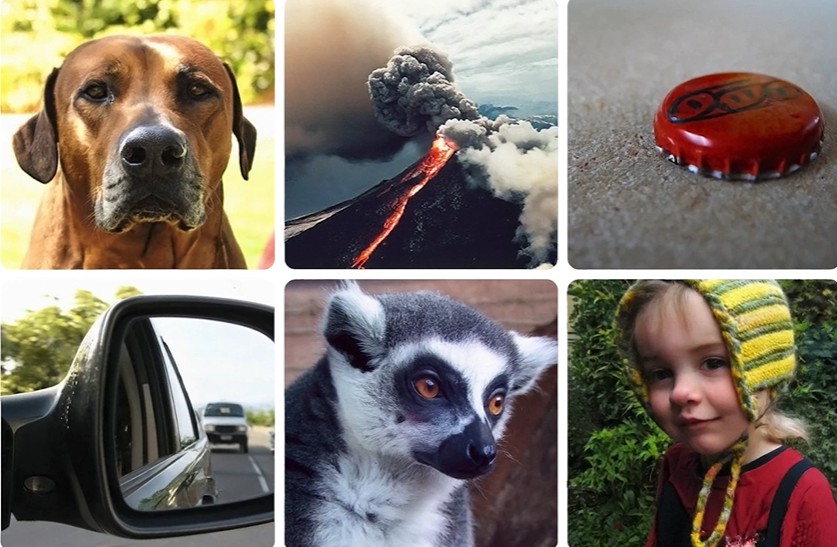
Researchers at the University of Rochester and Nvidia have developed an AI image-generation model that gives users more precise control over individual parts of an image. Called PixelDiT2, the model addresses a familiar problem with generative AI: requesting a small correction can unexpectedly alter other parts of an otherwise acceptable image.
Most advanced image generators rely on diffusion models operating in latent space. Instead of directly manipulating pixels, these systems compress visual information into lower-dimensional representations. This approach reduces computational requirements and enables fast image generation, but it can make localized editing difficult. Changing one feature may affect elements that users wanted to preserve.
Researchers led by University of Rochester professor Jiebo Luo are exploring a different approach. Their earlier PixelDiT model performs diffusion directly in pixel space, allowing users to target specific image regions. For example, the system could modify the pixels representing a person’s glasses or change a car’s color while leaving surrounding content intact. PixelDiT was presented at the 2026 IEEE/CVF Conference on Computer Vision and Pattern Recognition, where it was named a best paper finalist.
The team has now developed PixelDiT2, an improved model that makes pixel-space diffusion more efficient. According to the researchers, it achieves performance close to leading latent-space models while maintaining direct control over individual pixels. The PixelDiT2 research is scheduled for presentation at the NeurIPS conference in December 2026.
The approach could make generative AI more useful for designers, artists, engineers, and other professionals who require controlled revisions rather than complete image regeneration. The researchers are now extending their work to AI-generated video, where pixel-level control could help maintain consistency between frames while allowing precise modifications.
