

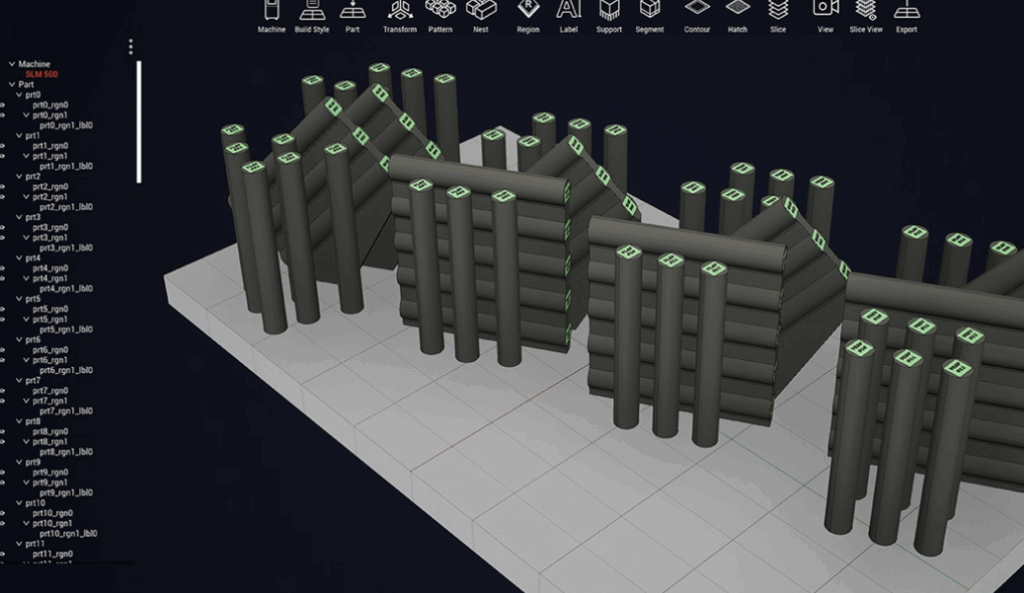
In a move aimed at improving the reliability of metal additive manufacturing (AM), Dyndrite has integrated advanced thermal-process simulation tools from Ansys into its LPBF Pro software, as reported in this article on 3D Printing Industry Blog. The thermal behavior of metal parts during laser-powder-bed fusion (LPBF) is one of the key hurdles for industrial-grade production; uneven heat build-up can cause warping, residual stresses, or inconsistent microstructures.
By embedding Ansys’ simulation capabilities into Dyndrite’s print-preparation environment, engineers can predict problematic thermal zones before printing starts, rather than relying solely on trial-and-error. One of the key advantages is for large, complex, and mission-critical components (such as aerospace or energy applications), where failed builds are costly and qualification cycles are long.
The integration supports encoding proven parameter strategies into Dyndrite’s Python APIs, enabling repeatable workflows across machines and sites. The expected benefits include fewer scrapped builds, reduced material waste, shorter development times, and improved part quality.
Looking ahead, the goal is to allow simulation results to directly influence toolpath adjustment and process parameters, region-by-region, automatically. In short, this collaboration marks a shift from reactive process control to proactive prediction in metal AM, bringing the industry closer to reliable, certified serial production rather than bespoke trial builds.
