

Artificial intelligence has long helped manufacturers identify defective parts, but deploying visual inspection systems can require thousands of labeled images showing specific flaws. Researchers have now demonstrated that a pretrained AI model can detect manufacturing defects after seeing far fewer examples, potentially lowering the cost and preparation required for automated quality control, tells Tech Xplore.
The research involved University of Dayton statistician Ying-Ju Chen and collaborators from universities in the United States and Europe. Their study, published in the Journal of Quality Technology, investigated whether OpenAI’s CLIP model could be adapted for few-shot image inspection across different manufacturing applications.
Conventional computer-vision inspection systems typically must be trained using large collections of labeled images representing cracks, scratches, faulty welds, and other defects. Gathering suitable images can take months, particularly when defects occur infrequently. The associated cost and effort can make AI-based inspection impractical for small and midsize manufacturers.
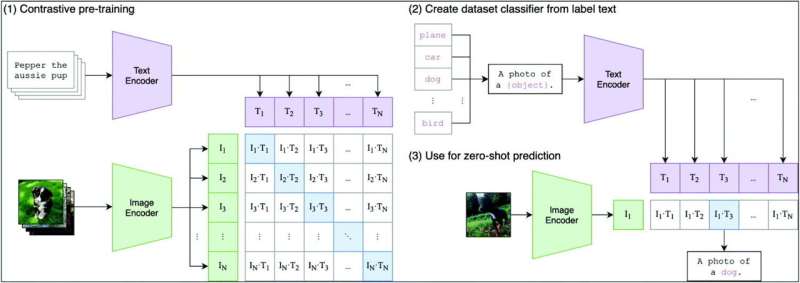
CLIP offers a different starting point because it was pretrained on hundreds of millions of image-text pairs. Instead of learning visual concepts entirely from a manufacturer’s defect dataset, the model can apply knowledge acquired during its earlier training. Researchers adapted CLIP using relatively small numbers of defect examples and tested it across several manufacturing inspection problems.
The results suggest pretrained models could reduce manufacturers’ dependence on large, application-specific datasets. The researchers also provide practical guidance for adapting and evaluating the approach, while recognizing its limitations.
The study does not make automated visual inspection itself new. Its significance lies in potentially lowering the barrier to implementation. Manufacturers that previously lacked enough defect images, time, or resources to train specialized models could have a more practical path toward AI-assisted quality control. For industries such as manufacturing and aerospace, few-shot inspection could make defect detection faster to deploy and accessible to a wider range of facilities.
