

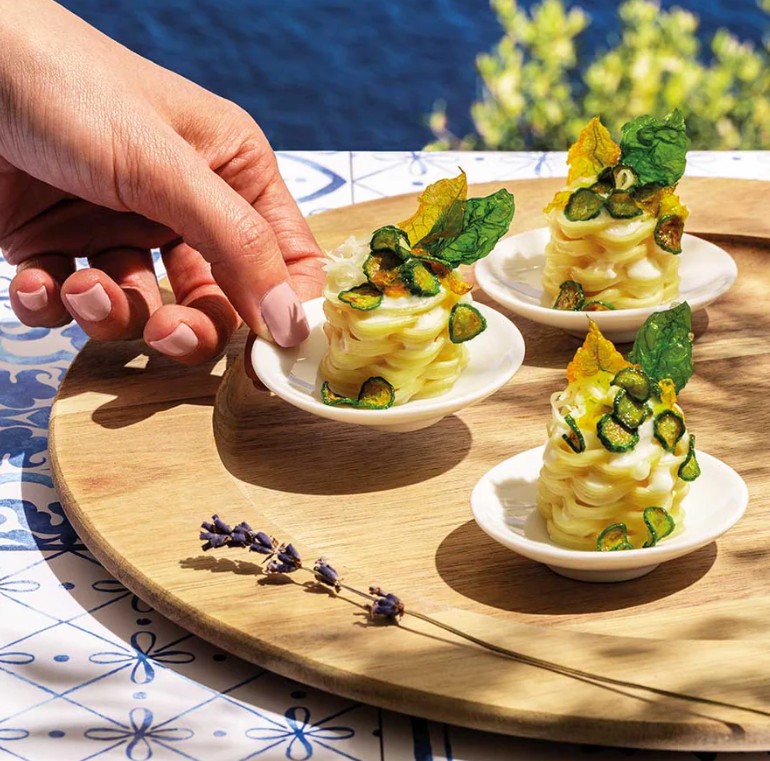
Additive manufacturing has entered the food world, enabling pasta, chocolate, and even steak-like items to be built layer by layer from pastes, powders, and gels before finishing with lasers or cooking processes. For example, Barilla has launched “Artisia,” a 3D-printed pasta line whose complex geometries are impossible with traditional molding, tells this interesting article on Particle.
This technology isn’t just for novelty: it promises new benefits in challenging environments. Space agencies such as NASA are exploring 3D food printing for long-duration missions, where fresh food supply is limited, and food shapes must be compact yet varied. In healthcare and aged care settings, it offers customized nutrition: foods can be tailored in texture and shape, uplifting appeal for patients with swallowing difficulties or specific dietary needs.
Beyond novelty, the move taps deeper trends: global nutrient-deficiency is a massive challenge, and printing food offers control over composition. Projects like Nestlé’s “Iron Man” hint at home-based nutrient-printing appliances, though this vision remains early-stage.
At the same time, the article acknowledges caution: consumer habits still favor traditional cooking, and the home-kitchen printer remains niche. Societal expectations around taste, texture, and naturalness may limit uptake beyond specialized use-cases.
3D food printing sits at the intersection of additive manufacturing, food science, and digital design. It invites discussions on the rheology of food “inks,” printer-hardware adaptation, personalized nutrition, and new business models around on-demand production. Ultimately, its impact may not be in replacing ovens at home but in enabling improved nutrition, custom diets, and new food-production pathways for sectors from healthcare to space.
