

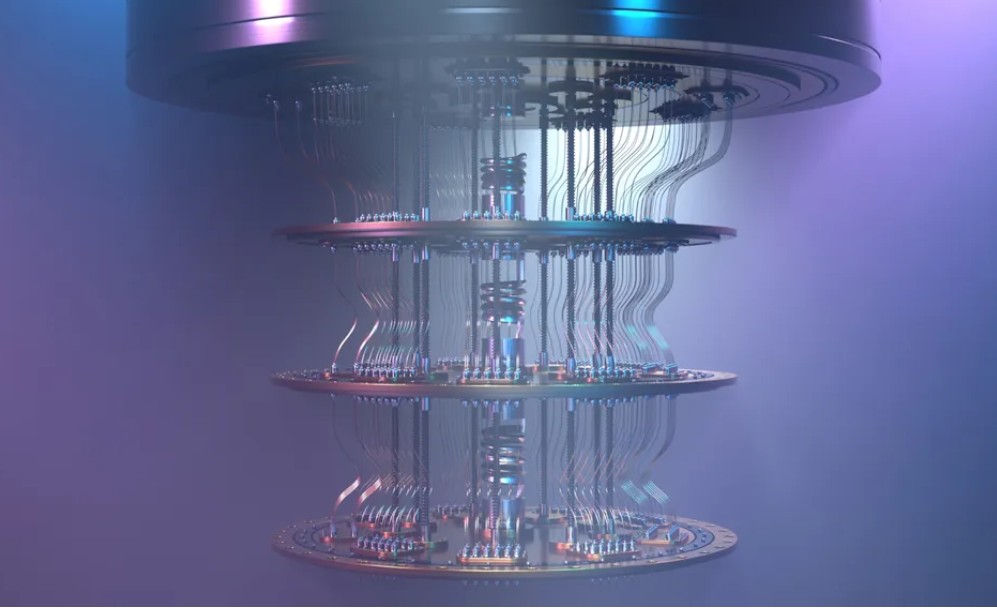
Researchers have demonstrated a new use for quantum computing by identifying an extremely rare material that could play an important role in future nuclear fusion technology. The study shows that quantum computers can help scientists solve complex materials science problems that are difficult for even the most powerful classical computers. By modeling the behavior of atoms and electrons with greater precision, the researchers accelerated the search for materials capable of withstanding the extreme conditions inside fusion reactors, tells Live Science.
The research focused on a rare crystal whose atomic structure gives it properties that could benefit fusion energy systems. Fusion reactors expose materials to intense heat, pressure, and radiation, making the discovery of durable materials one of the field’s biggest engineering challenges. Conventional computer simulations often struggle to accurately predict the quantum interactions that determine a material’s behavior, especially when many electrons interact simultaneously. Quantum computers, which operate according to the principles of quantum mechanics, are better suited to modeling these complex interactions.
Instead of relying solely on laboratory experiments or classical simulations, the researchers used quantum algorithms to analyze the electronic structure of candidate materials. This approach enabled them to evaluate properties more efficiently and identify a promising crystal that might otherwise have remained overlooked. Although today’s quantum computers remain limited in size and reliability, the study demonstrates that they can already contribute to practical scientific research when combined with advanced computational techniques.
The work represents a significant step toward using quantum computing for real-world engineering applications. Beyond fusion energy, the same methods could accelerate the discovery of materials for batteries, superconductors, semiconductors, and advanced electronics. Faster materials discovery could shorten development cycles and reduce the cost of bringing new technologies from the laboratory to commercial use.
The researchers emphasize that quantum computing is not yet replacing classical supercomputers. Instead, it is becoming a complementary tool capable of solving specialized problems that are otherwise extremely difficult. As quantum hardware continues to improve, its ability to model complex materials is expected to expand, potentially transforming the way scientists design materials for clean energy, electronics, and other advanced technologies.
