

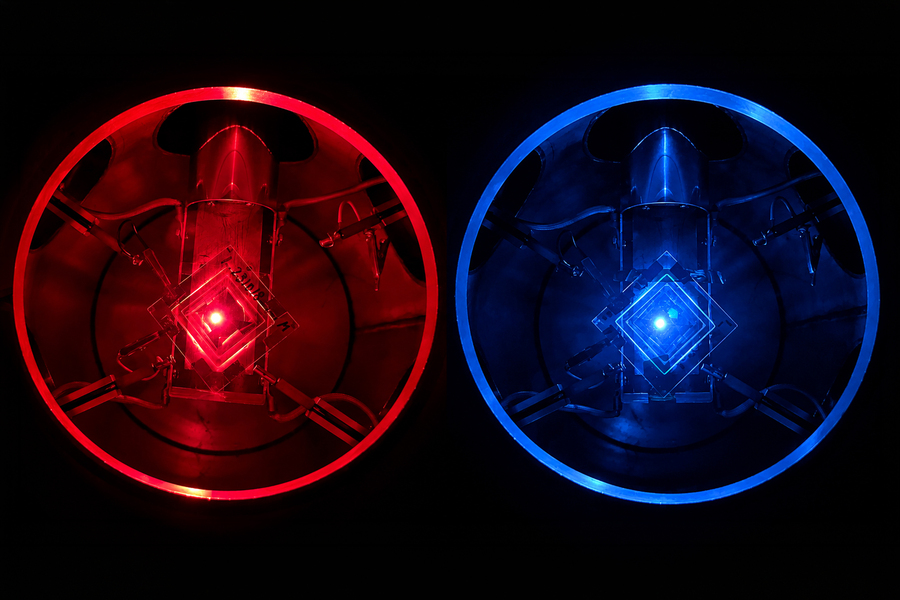
Researchers at MIT, working with Samsung, have identified a practical way to overcome one of the biggest obstacles preventing quantum dot light-emitting diodes (QD-LEDs) from reaching commercial use. Their discovery could pave the way for brighter, more energy-efficient digital displays with richer colors for televisions, smartphones, augmented and virtual reality headsets, medical imaging systems, and large-area lighting. The findings also provide new insight into why these advanced LEDs degrade during operation, tells MIT News.
Quantum dots are nanoscale semiconductor particles that emit exceptionally pure red, green, and blue light. While they are already used in premium display technologies, current products rely on optically excited quantum dots. Electrically excited QD-LEDs promise greater efficiency and a simpler manufacturing process, but their short operating life, especially for blue-emitting devices, has prevented widespread commercialization. Blue QD-LEDs degrade 50–100 times faster than their red and green counterparts, making them unsuitable for long-term consumer electronics.
To understand the problem, the MIT team examined the microscopic structural and chemical changes inside operating QD-LEDs. Using advanced imaging techniques, they discovered that hydrogen and oxygen released within the devices caused the quantum dot layers to deteriorate, leading to thinning, particle clustering, and reduced performance. The researchers found that encapsulating the devices in a simple acrylate-based resin prevented these gases from escaping and minimized the resulting damage. This straightforward, scalable process increased the lifespan of some blue QD-LEDs by as much as 5,000 times while also improving the durability of red devices.
Beyond demonstrating a significant performance improvement, the study explains the underlying mechanisms responsible for QD-LED degradation, giving engineers a roadmap for developing even more durable devices. Although additional degradation pathways remain to be addressed, the researchers believe their work removes a major barrier to commercialization. As further refinements are made, electrically excited quantum dot LEDs could deliver thinner displays, lower power consumption, and more vibrant color reproduction than existing technologies, opening new possibilities for consumer electronics, medical equipment, and advanced lighting applications.
