

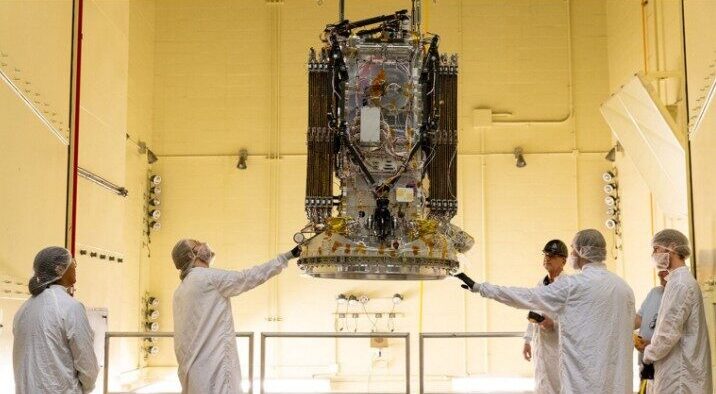
NASA is preparing for one of its most ambitious satellite servicing missions, aiming to rescue the aging Swift Observatory before atmospheric drag pulls it out of orbit. Developed in just 10 months, the mission represents a dramatic departure from traditional spacecraft development timelines and could establish a new model for rapid-response space operations, tells Ars Technica.
Swift, launched in 2004 to detect gamma-ray bursts, remains one of astronomy’s most valuable observatories. Its unique ability to quickly identify and locate powerful cosmic explosions enables astronomers worldwide to conduct follow-up observations. However, because the spacecraft was built without propulsion, it has steadily lost altitude as Earth’s upper atmosphere creates drag. Increased solar activity has accelerated this orbital decay, leaving NASA with only a narrow window to intervene before Swift descends too low for a rescue.
To meet the challenge, NASA awarded a $30 million contract to Katalyst Space Technologies, a startup founded in 2020. The company designed Link, a servicing spacecraft equipped with three robotic arms that will rendezvous with Swift, capture it, and use Hall-effect thrusters to raise the observatory into a safer orbit. If successful, the mission will extend Swift’s scientific life while demonstrating that operational satellites can be serviced instead of abandoned.
Completing a mission of this complexity in less than a year required NASA and its partners to abandon conventional procurement and development practices. Rather than issuing a lengthy competitive solicitation, NASA turned to existing technology partners and selected the most practical proposal. Katalyst accelerated production by manufacturing some components in-house, streamlining testing, and accepting greater development risks to meet the deadline.
The Link spacecraft has successfully completed environmental testing and is scheduled for launch aboard Northrop Grumman’s final Pegasus XL rocket. The air-launched vehicle was chosen because it can reach Swift’s unusual low-inclination orbit more efficiently than traditional launch systems.
Although significant technical challenges remain, including autonomous rendezvous and robotic capture of an unprepared satellite, NASA already views the effort as a milestone. Beyond preserving an important scientific observatory, the mission could validate commercial satellite servicing as a practical business model and demonstrate a faster, more agile partnership between government agencies and private space companies. If successful, it may redefine how future satellites are maintained, repaired, and extended in orbit.
