

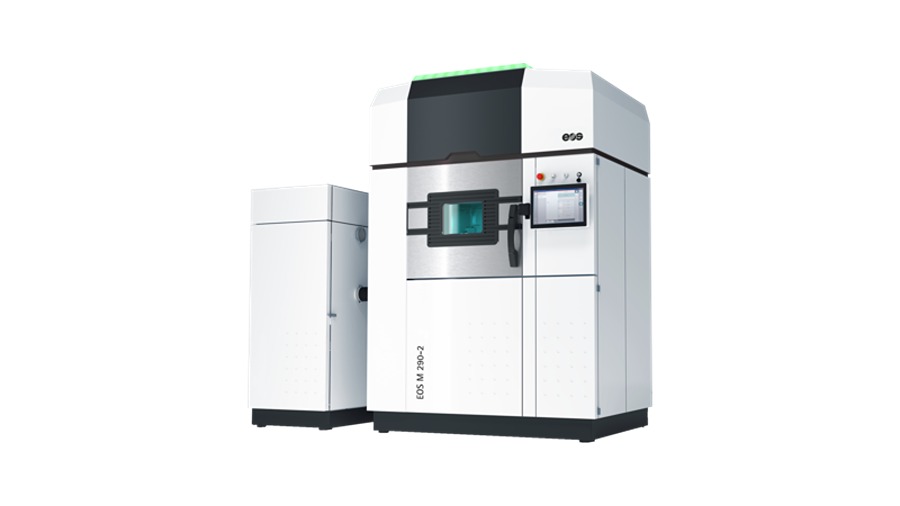
HAIFA, Israel, KRAILLING, Germany and BOSTON, MA, July 15, 2026 – Rambam Health Care Campus, EOS, and PTC will build a Digital Implant Engineering Center in Haifa, Israel, to design, validate and produce patient-specific implants and devices. Engineers and physicians will use Creo CAD and metal 3D printing to connect clinical requirements with implant production.
The collaboration combines Rambam’s clinical expertise, EOS’s metal 3D printing technology, and PTC’s Creo CAD software. The center’s workflow will cover 3D CAD design, validation, manufacturing, and quality processes for customized implants and devices.
The partners said point-of-care implant production can improve coordination between surgeons and developers, reduce reliance on external suppliers, and speed up patient treatment. Patient-specific implants are designed to fit a patient’s anatomy more closely than standard implants. The approach is also to support surgical accuracy, shorten procedures and recovery times, and meet regulatory requirements for safety and effectiveness.
“Personalized care represents the future of medicine, and Rambam is establishing a significant benchmark with its dedicated in-house center,” said Dr. Michal Mekel, director general (CEO), Rambam Health Care Campus. “This initiative supports Rambam in developing patient-specific care that emphasizes innovation, clinical value, and operational excellence.”
“Point-of-care innovation in healthcare depends on integrating advanced industrial-grade additive manufacturing with validated hospital workflows. Our open software structure enables such scan-to-print workflows,” said Nikolai Zaepernick, CSO, EOS. “We view this as a vital step toward a repeatable, highly responsive and digitally connected model for patient-specific care.”
“Cutting-edge personalized implants require a connected digital foundation that ties together clinical need, design, manufacturability and workflow discipline,” said Dr. Ronen Ben-Horin, vice president technology, PTC. “The Digital Engineering Center at Rambam demonstrates how intelligent digital engineering drives innovation. We see this development as a breakthrough for the health care industry and are proud our technology will play a central role.”
The partners said the framework could help hospitals combine clinical expertise, engineering processes, and additive manufacturing to produce customized implant solutions for complex treatments.
Source: PTC
About Rambam Health Campus

Rambam Health Care Campus is an Israeli academic government hospital founded in 1938 and based in Haifa, Israel. It serves Northern Israel and provides medical care, trauma services, surgery, internal medicine, outpatient care, childbirth services, laboratory services and medical institutes. Rambam also supports clinical research, medical education and international training programs. The hospital operates 1,100 beds for more than 2.7 million regional residents and acts as a referral center for 12 district hospitals. Patients also come from Israel, the Mediterranean region and other countries. Its users include patients, referring hospitals, researchers, medical professionals, defense forces, peacekeeping forces and clinical trial partners. Rambam has 65 inpatient departments, 39 medical institutes and 15 central laboratories. It works with Technion and the University of Haifa in teaching roles. Rambam has about 6,000 employees.
About EOS

EOS GmbH manufactures industrial 3D printing systems, materials and related services for additive manufacturing. The company develops metal and polymer equipment using laser-based powder bed fusion processes. It also provides software, training, maintenance and application support across production workflows, from design to manufacturing. EOS serves industries including aerospace, automotive, medical, energy and industrial manufacturing. The company was founded in 1989. Its headquarters is in Munich, Germany. EOS operates in over 15 countries. Its systems produce parts from 3D CAD models. The company works with customers on applications, process development and production using additive manufacturing technologies.
About PTC

PTC was founded in 1985 and headquartered in Boston, MA, develops software for engineering and product development teams worldwide. Its portfolio includes CAD, PLM, IIoT, application lifecycle management, and augmented reality tools. The software supports product design, manufacturing, data management, and service operations. PTC serves manufacturers in aerospace, automotive, electronics, industrial equipment and energy sectors. The company reports more than 30,000 customers globally, including 95% of Fortune 500 manufacturers. PTC employs about 7,500 people worldwide. It operates primarily on a subscription-based business model focused on digital product development and connected operations.
