

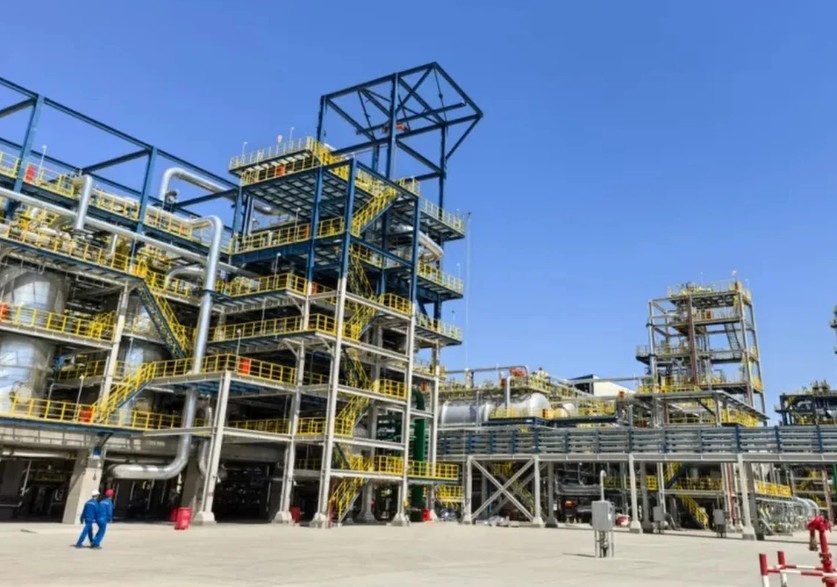
China has taken a major step toward producing stronger, more durable synthetic rubber by industrializing a rare earth-based manufacturing process that has been under development for more than six decades. Researchers from the Changchun Institute of Applied Chemistry worked with Dushanzi Petrochemical to complete trials of a new production facility capable of manufacturing 100,000 tonnes of high-strength synthetic rubber annually. The plant, which began production on July 16, is expected to supply advanced materials for electric vehicle tires, heavy-duty transport, manufacturing, and defense applications, tells South China Morning Post.
The new facility focuses on producing cis-butadiene rubber, a premium form of synthetic rubber known for its durability, elasticity, and resistance to wear. Unlike natural rubber harvested from trees, butadiene rubber is synthesized primarily from petroleum-derived feedstocks. Its performance depends heavily on the catalyst used during production. While nickel, titanium, and cobalt catalysts have long been common, the new process relies on rare earth metals, particularly neodymium, to improve the polymer’s molecular structure and mechanical properties. China, the world’s leading producer of rare earth elements, is well positioned to support this manufacturing approach.
According to the researchers, the technology builds on pioneering work initiated by the Changchun Institute of Applied Chemistry in the 1960s. Decades of research into rare earth catalytic synthesis have now matured into a commercial-scale process that delivers higher-quality synthetic rubber suitable for demanding transportation applications. The improved material is designed to withstand the greater weight, torque, and wear associated with electric vehicles while also meeting the durability requirements of heavy-duty trucks and other industrial uses.
The project also demonstrates how advances in catalyst chemistry can strengthen domestic manufacturing capabilities. By combining extensive research with large-scale production, China aims to improve the performance of an essential industrial material while reducing dependence on conventional catalyst systems. As electric vehicles become more widespread and transportation demands continue to grow, stronger synthetic rubber could play an increasingly important role in extending tire life, improving vehicle efficiency, and supporting next-generation mobility technologies.
