

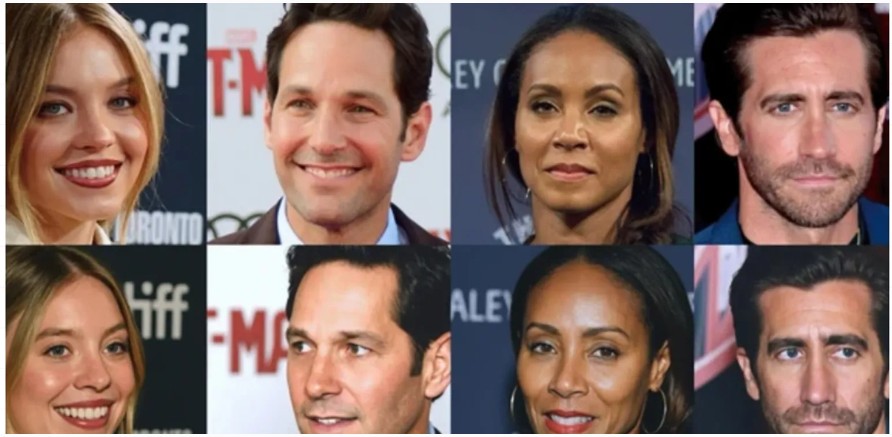
A research team from Swansea University, the University of Lincoln, and Ariel University has demonstrated that AI-generated images of real people can be nearly indistinguishable from authentic photographs. Using tools such as DALL·E and ChatGPT, the researchers created synthetic imagery of both unfamiliar fictional faces and well-known celebrities. Participants from multiple countries (the United States, the United Kingdom, Canada, Australia, and New Zealand) were tasked with identifying whether images were real or generated. The result: many were unable to reliably spot the fakes, even when shown familiar individuals or comparison photos.
One experiment involved celebrity images, such as actors, where the fake versions were misidentified as real more often than expected. Prior familiarity or having a reference photograph offered only a limited advantage in detection. The authors argue this marks a new threshold of “deepfake realism,” where the human viewer’s ability to judge authenticity is significantly challenged.
The implications are wide-ranging. On one hand, AI-generated imagery offers creative and commercial possibilities; on the contrary, there is risk: false endorsements, manipulated public opinion, image abuse, and erosion of trust in visual media. Professor Jeremy Tree, part of the team, emphasizes the urgency of developing detection methods and raising digital literacy.
The takeaway is twofold: (1) Generative-image models have matured to a point where manual verification by humans is increasingly unreliable; (2) there is a need for tool-based detection, metadata/signature tracking, and robust workflows in media systems to verify authenticity. In a world where visuals are often taken at face value, this research underscores that we may soon live in an era where seeing no longer means believing.
