

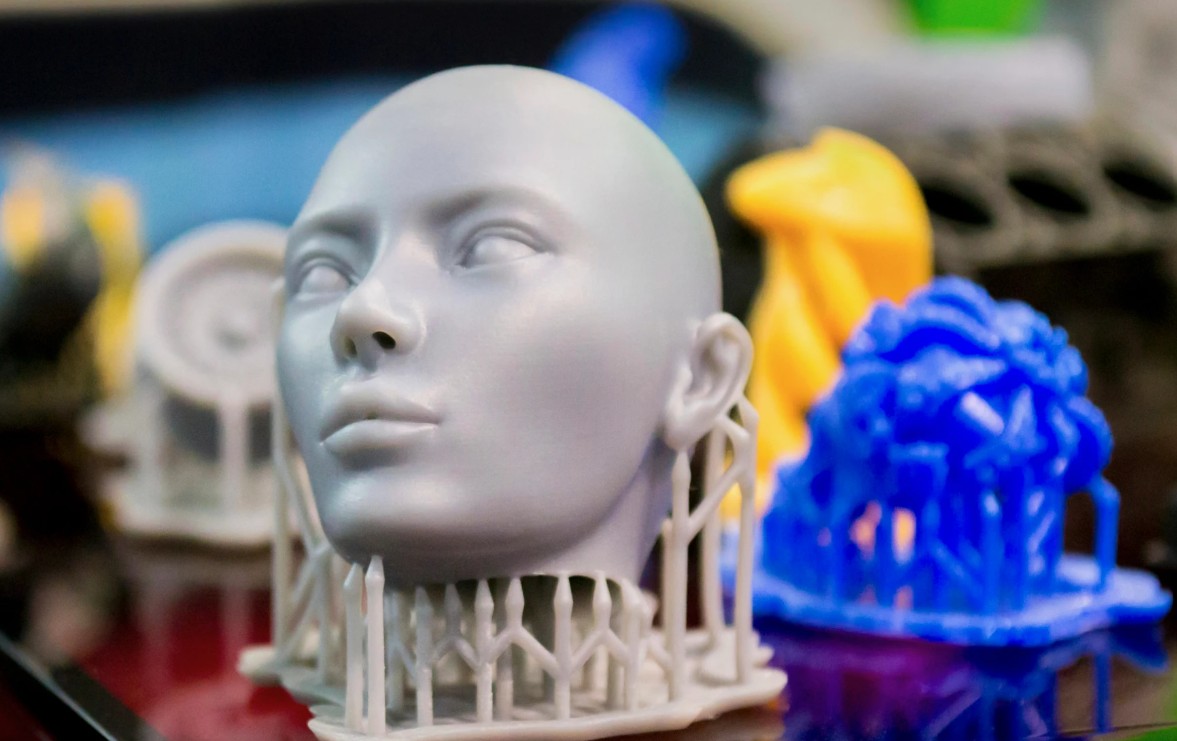
Researchers at Yokohama National University have developed a recyclable resin that could make high-precision stereolithography (SLA) 3D printing far more sustainable. Unlike conventional photopolymer resins, which permanently harden when exposed to ultraviolet light and cannot be reused, the new material can be broken down and reprocessed into fresh printing resin multiple times. The breakthrough addresses one of the biggest environmental challenges in resin-based additive manufacturing, where failed prints, support structures, and excess material typically become unrecoverable waste, tells this New Atlas article.
The innovation centers on anthracene, a polycyclic aromatic hydrocarbon commonly derived from coal tar. Anthracene molecules undergo a reversible photodimerization reaction: they form strong three-dimensional bonds when exposed to light but return to their original molecular structure when heated. By exploiting this property, the researchers created a resin that can be cured for printing and later restored to a reusable liquid without relying on chemical initiators or additional recycling agents.
To demonstrate the material’s capabilities, the team tested it using both single-photon microstereolithography and two-photon lithography, two techniques known for producing highly detailed microscopic structures. The recyclable resin achieved printing accuracy comparable to that of conventional SLA materials while maintaining its properties through repeated recycling cycles. Because the resin cures through step-growth polymerization rather than traditional initiator-driven chemistry, its formulation is simpler and less susceptible to contamination during reuse.
The researchers believe the technology could benefit applications where material conservation is especially important. Industries ranging from medical device manufacturing and precision engineering to aerospace and scientific research depend on high-resolution 3D printing, yet often generate significant resin waste during prototyping and production. The ability to repeatedly recycle the same material could reduce costs, conserve resources, and support manufacturing in remote environments, including future missions to the Moon or Mars, where replacing raw materials would be difficult and expensive.
While further development is needed before commercial adoption, the study demonstrates that high-resolution resin printing does not have to come at the expense of sustainability. By combining precision fabrication with near-complete material recovery, the new resin represents a meaningful step toward a circular economy for additive manufacturing, where advanced performance and environmental responsibility can coexist.
