

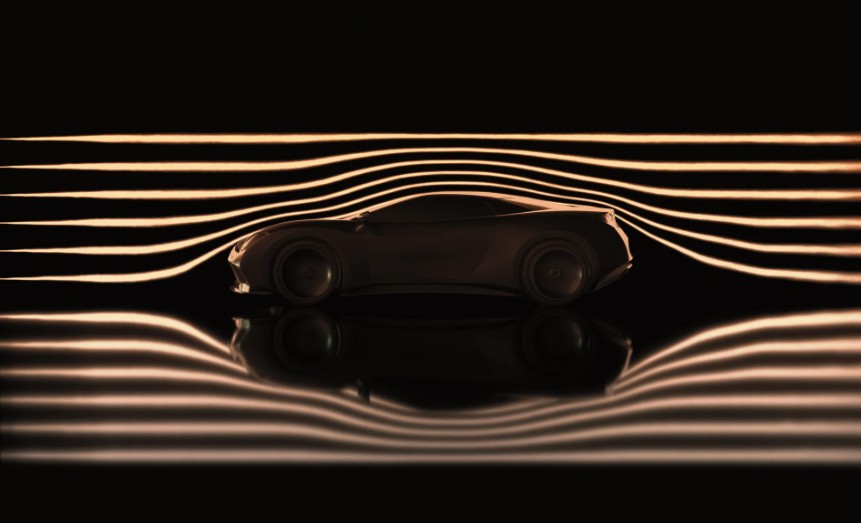
A new study highlighted by Wired.com (full article available to subscribers) is forcing aerospace engineers to revisit one of aviation’s most familiar principles: the explanation of why wings generate lift. For decades, textbooks and classrooms have leaned heavily on Bernoulli’s principle, which links faster airflow over a wing to lower pressure and upward lift. While the equation itself remains valid, researchers now argue that the traditional explanation has oversimplified the real physics behind flight.
The article explores how scientists are reevaluating airflow behavior around wings using modern computational tools and experimental methods unavailable to early aviation pioneers. According to the new findings, lift cannot be fully explained by pressure differences alone or by the commonly taught idea that air moving over the top of a wing must travel farther and therefore faster. Researchers say this “equal transit time” explanation has persisted for years despite being physically inaccurate.
Instead, the newer interpretation focuses more heavily on circulation, momentum transfer, and the wing’s ability to redirect air downward. In this view, lift emerges from a complex interaction between pressure fields, vortices, and Newton’s laws of motion. Wings generate upward force because they push air downward, creating a corresponding upward reaction force on the aircraft.
The debate is not merely academic. Improved understanding of airflow could influence the future design of aircraft, drones, wind turbines, and high-efficiency flight systems. Modern aerospace engineering increasingly depends on precise simulations, especially as companies experiment with unconventional wing geometries, electric aviation, and autonomous aircraft.
The article also highlights a broader lesson about science and engineering: even deeply established concepts can evolve under closer scrutiny. Aviation’s foundational equations remain intact, but the interpretation surrounding them is becoming more nuanced, revealing that flight is governed by a richer and more interconnected set of aerodynamic behaviors than earlier explanations suggested.
