

Future astronauts exploring the moon will need reliable interfaces that help them navigate difficult terrain, monitor critical information, and make decisions under pressure. A team of Rice University students is helping NASA explore what those systems could look like through the agency’s Spacesuit User Interface Technologies for Students, or SUITS, challenge.
Rice’s OWL SUITS team, led by members of the university’s Augmented Reality/Virtual Reality Club, developed an interface for operating a pressurized rover during a simulated lunar mission. The scenario involved locating an unmanned rover that had stopped functioning at a known position on the moon.
The team’s software helps an operator navigate toward the disabled rover using autonomous path planning and real-time obstacle avoidance. It also displays essential information, including crew health data and vehicle resource status. The autonomous system can calculate routes around obstacles and adjust its path when new hazards emerge.
Students built the software system from scratch. They designed the interface in Figma, conducted user testing and human factors research, and tested its performance under degraded network conditions. A major goal was reducing cognitive load so operators could quickly understand important information without becoming overwhelmed.
Seven Rice students traveled to NASA’s Johnson Space Center in May for SUITS Test Week. NASA mentor Alex Kanelakos evaluated their interface during an approximately 45-minute session and provided feedback. The students then worked overnight to make improvements before another round of testing.
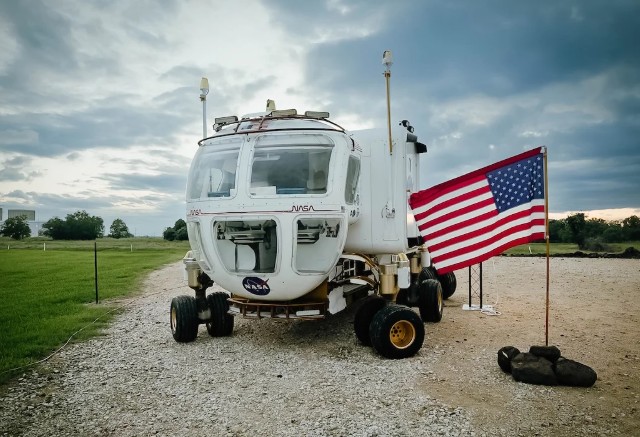
The experience also gave the team access to NASA facilities, including Mission Control, virtual reality simulation laboratories, spacecraft mockups, and the Neutral Buoyancy Laboratory. Students even examined a real pressurized rover similar to the vehicle their interface was designed to support.
The project demonstrates the importance of combining computer science, autonomous navigation, interface design, and human factors when developing technology for future lunar missions. It also gave students an opportunity to test their engineering decisions directly with NASA experts preparing for future human space exploration.
