

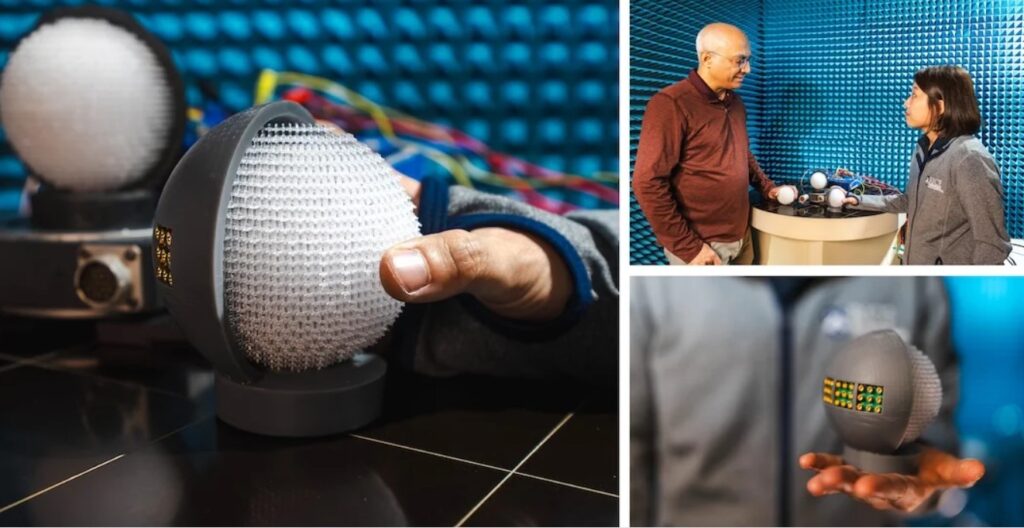
Autonomous vehicles rely on sensors such as cameras, lidar, and radar to perceive the environment, but these onboard systems still struggle with blind spots and occlusions caused by buildings, parked vehicles, or poor visibility conditions. Researchers at Rice University are exploring a new approach that moves part of the sensing capability off the vehicle and onto the roadside. Their system, called EyeDAR, uses compact radar sensors mounted on infrastructure such as streetlights, traffic signals, or stop signs to improve situational awareness for self-driving cars.
EyeDAR is a low-power millimeter-wave radar device roughly the size of an orange. Positioned above the roadway, the sensor captures radar reflections from nearby traffic and objects that may not be visible to a vehicle’s onboard sensors. This external vantage point allows the system to detect vehicles, pedestrians, or obstacles hidden around corners or blocked by other cars. The sensor determines the direction of reflected signals and communicates this information to autonomous vehicles, effectively extending their perception range.
The concept addresses one of the persistent challenges of autonomous driving: incomplete situational awareness. Cameras and lidar can struggle in fog, heavy rain, or low-light conditions, while even onboard radar can miss objects when they are physically obstructed. By placing sensors on roadside infrastructure, engineers can capture signals that would otherwise be lost, providing vehicles with additional information about their surroundings.
The technology is designed to be inexpensive and easy to deploy across existing infrastructure. If widely implemented, networks of these sensors could create cooperative sensing environments where vehicles and roads share data. In such systems, intersections or busy urban corridors could supply real-time information to approaching vehicles, helping them anticipate hazards earlier.
Researchers believe that infrastructure-assisted sensing could significantly improve safety as autonomous vehicles become more common. By complementing the sensors built into cars with external radar “eyes,” future transportation systems may reduce blind spots and enable more reliable navigation in complex urban environments.
