

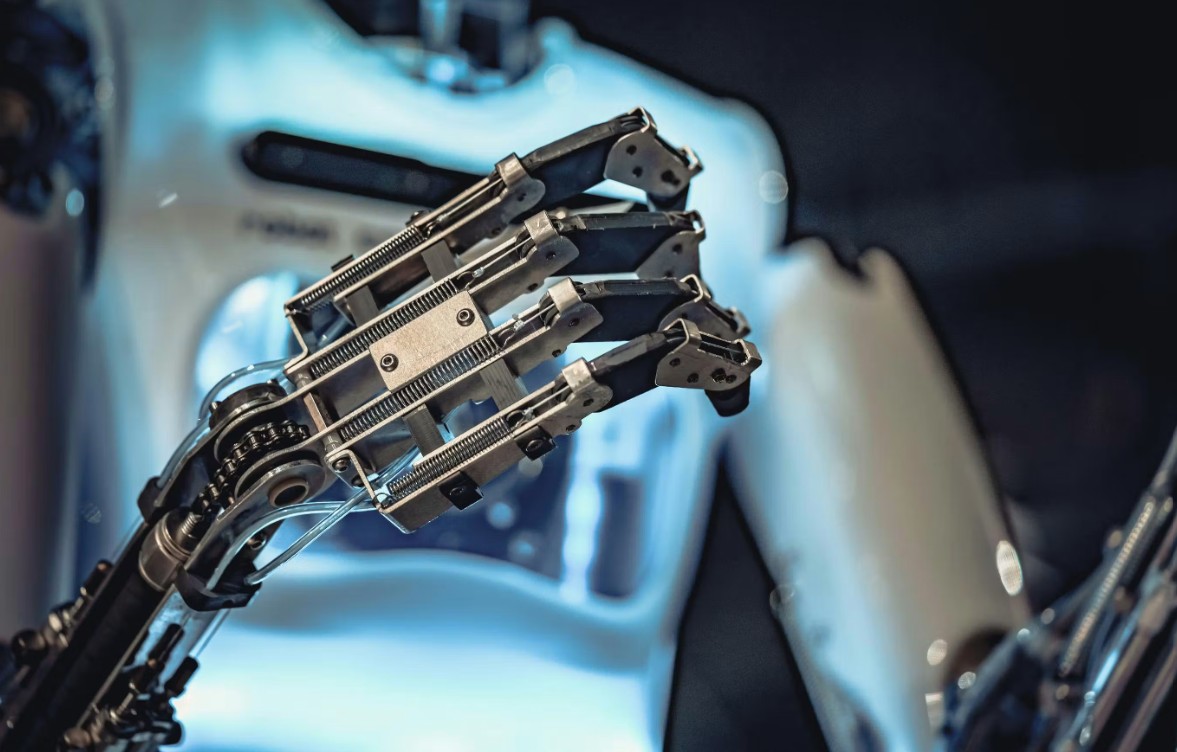
Robot development in the United States is entering a hardware-focused period as regulatory changes increase demand for domestically manufactured humanoids, autonomous mobile robots, and other advanced robotic systems. Machine Design highlights several component trends that mechanical engineers should watch as manufacturers pursue greater performance, reliability, and affordability.
Sensors are advancing rapidly. Solid-state LiDAR eliminates moving parts to improve reliability and lifespan, while smaller photonic systems promise lighter designs. Higher-resolution cameras, compact vision systems, and sensors combining radar and camera data are also improving object detection, navigation, localization, and tracking.
Swarm robotics introduces different hardware challenges. Groups of coordinated robots require dependable communications, sensing, power management, and distributed control. Component selection becomes especially important because individual robots must work reliably while supporting collective behavior even when one unit fails.
Materials offer another route to lower costs. Replacing metal components with engineered plastics can reduce both weight and energy consumption. Celanese and VIGOR, for example, are working to cut humanoid robot joint-module weight by at least 30% by replacing certain metal parts with plastics. Researchers are also developing elastomers capable of large deformation, repeated operation, and self-healing after damage.
Actuators remain one of the largest cost areas in humanoid robots, accounting for an estimated 40–60% of their bill of materials. Emerging soft-actuator technologies could eventually influence conventional robots. Researchers are exploring magnetic, electrothermal, piezoelectric, light-responsive, and electrostatic approaches to achieve lower power consumption, greater flexibility, and useful load capacity.
These hardware developments arrive as robot adoption continues globally. The article argues that U.S. expansion will depend not only on AI advances but also on mechanical and software engineering expertise, stable supply chains, better materials, and more efficient manufacturing.
For mechanical engineers, robotics therefore presents growing opportunities in sensing integration, lightweight structures, actuators, materials, power systems, and component design.
