

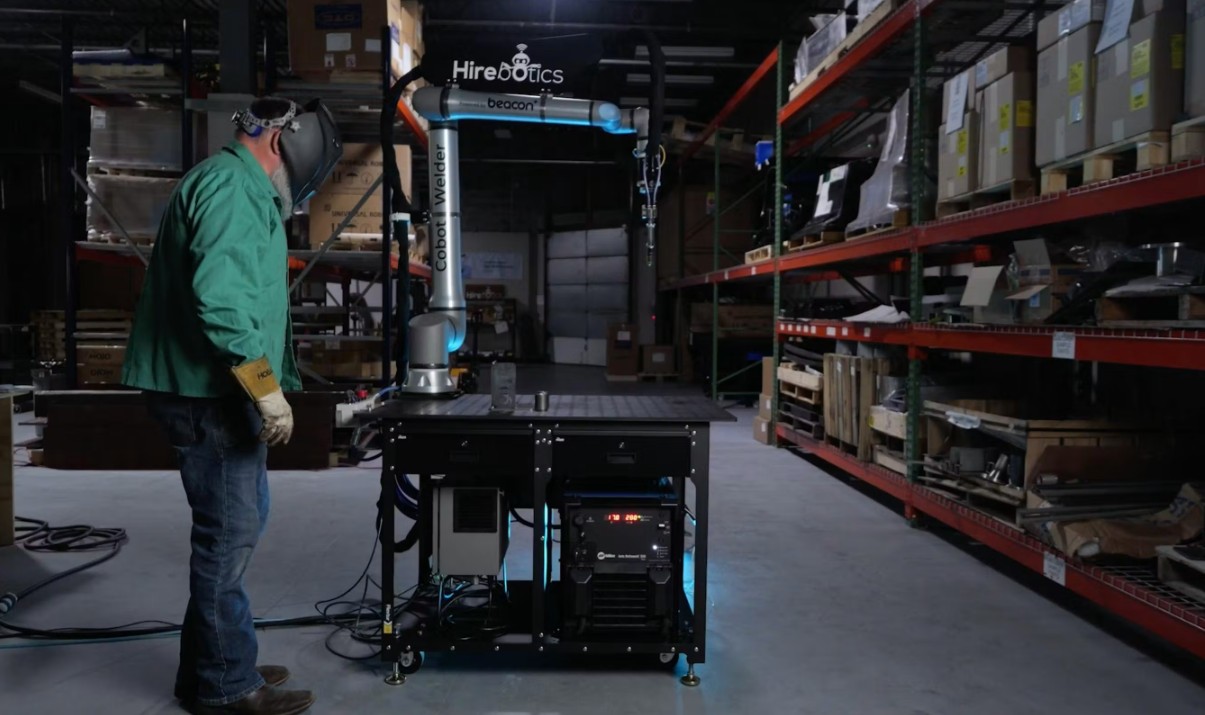
Robotics as a Service (RaaS) is evolving beyond equipment financing into a comprehensive model combining robotic hardware, software, maintenance, and ongoing support. In an interview with Machine Design, Hirebotics co-founder and CEO Matt Bush explains how this shift is changing industrial automation economics, engineering priorities, and deployment strategies.
Founded in 2015, Hirebotics initially offered customized robotic systems for applications ranging from machine tending to inspection. The company subsequently shifted toward standardized, application-specific solutions for welding, cutting, and painting. This approach reduces engineering complexity and enables repeatable deployments across multiple manufacturing facilities.
The subscription model allows manufacturers to replace substantial upfront capital expenditures with operating expenses. However, Bush observes that purchasing preferences vary. Smaller manufacturers often prefer owning equipment, while larger organizations may favor subscriptions to simplify budgeting and accelerate automation adoption.
Software has become a major differentiator. Hirebotics’ cloud-connected Beacon platform allows workers to operate robots through a smartphone interface without extensive programming knowledge. Centralized software management also enables the company to distribute updates, resolve technical problems, and maintain consistent functionality across its global installations.
For machine designers, RaaS introduces new priorities. Standardization, component availability, serviceability, and system uptime become increasingly important when providers retain responsibility for equipment performance throughout its operating life.
Bush also identifies physical AI and machine vision as technologies that could expand robotic applications. Future systems may adapt to changing environments, reducing dependence on specialized fixtures and precisely controlled workspaces.
Such capabilities could allow robots to learn from repeated operations and improve productivity over time. Bush describes an earlier installation that doubled its output from 25 to 50 assemblies per hour through manual optimization, illustrating the potential for AI-assisted improvements.
Ultimately, RaaS represents a broader transition toward accessible, software-defined automation. By combining standardized hardware, intuitive interfaces, continuous support, and adaptive intelligence, providers aim to make industrial robots practical tools for workers rather than specialized machines requiring extensive engineering expertise.
