

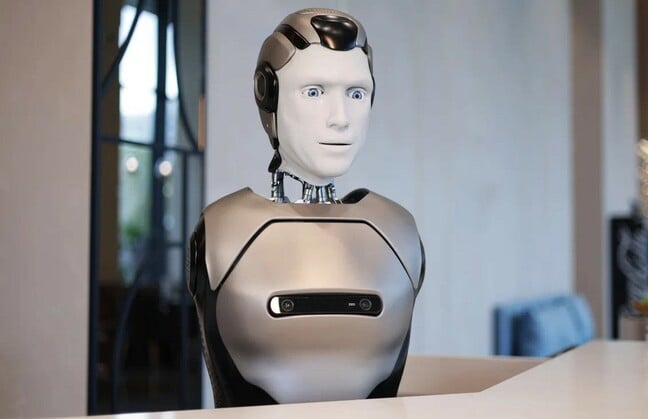
At a Moscow tech event, the Russian robotics startup Artificial Intelligence Dynamic Organism Lab (AIDOL) introduced its eponymous humanoid. Built to carry up to 10 kg, operate autonomously for six hours and interpret human emotions across 12 micro-expressions, the robot was billed as a major domestic milestone in anthropomorphic AI, tells The Register.
However, the presentation quickly derailed. As the robot entered to the “Rocky” theme song, it took a few tentative steps, raised an arm, lost balance, and crashed face-first onto the stage floor. The mishap was broadcast live and immediately went viral (click here to watch the video on YouTube). Media reports noted that 77% of its components are Russian-made, with plans to increase that to 93%.
In a statement afterwards, the company said the fall was due to calibration and lighting issues and emphasized that such failures are part of developing frontier technology. The team described themselves as a small 14-person startup, self-funded and independent of state backing.
For engineers and robotics professionals, the incident is a reminder of the significant challenges that remain in humanoid mobility and balance in real-world conditions. Although the hardware and capability claims are ambitious, slipping on stage signals that essential capabilities, such as like dynamic stability, sensor-fusion, and actuated control under variable lighting, are not yet fully mature. The spectacle also raises reputational risk: when high-profile demos go wrong, it may affect investor confidence, partnerships and international perception of domestic strength in robotics.
AIDOL’s debut demonstrates ambition, yet underscores the gap between conceptual design, marketing, and reliable field-performance in humanoid robotics.
