

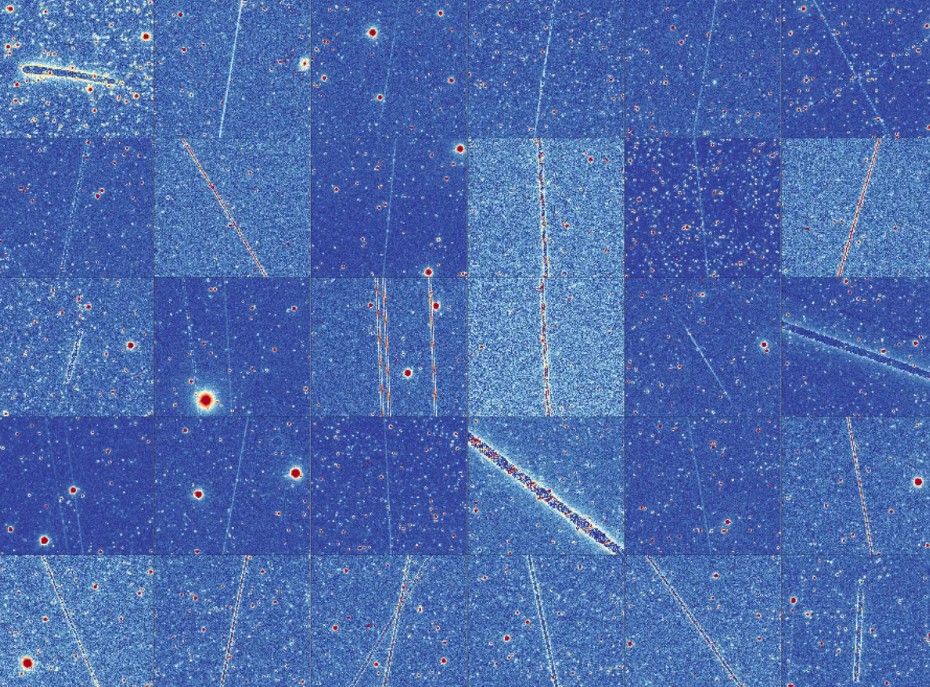
The rapid expansion of satellite mega-constellations is creating a new challenge for astronomers, as reflected sunlight from thousands of spacecraft increasingly interferes with observations from space-based telescopes. Recent findings from NASA’s SPHEREx mission provide some of the clearest evidence yet that satellite light pollution is becoming a significant obstacle for astronomical research, tells IEEE Spectrum.
SPHEREx, launched to map the entire sky in infrared wavelengths, has detected satellite streaks in a substantial portion of its images. Researchers found that roughly 73% of the telescope’s exposures contain traces of satellite interference. While many of these streaks can be identified and removed during data processing, they still reduce observing efficiency and increase the complexity of scientific analysis.
The issue extends well beyond SPHEREx. Scientists have used the mission’s observations to validate earlier models predicting the impact of satellite constellations on other space telescopes. Their results suggest that satellite contamination could affect approximately 40% of observations made by the Hubble Space Telescope and an even larger share of images captured by wide-field observatories. Future satellite deployments could further increase these numbers as operators continue to expand broadband networks in low Earth orbit.
The problem differs from traditional light pollution experienced by ground-based observatories. Space telescopes operate above Earth’s atmosphere and are designed to capture extremely faint signals from distant galaxies, stars, and other celestial objects. Even brief reflections from satellites can introduce unwanted artifacts that obscure scientific data or require additional processing to remove.
Researchers emphasize that the challenge is not limited to a single company or constellation. Instead, it reflects a broader transformation of Earth’s orbital environment as thousands of satellites are launched to provide global communications services. Scientists are exploring mitigation strategies, including changes to satellite design, operational practices, and observation scheduling, but acknowledge that the growing density of spacecraft will require continued coordination between the astronomy community and satellite operators.
The findings highlight a new reality for space science: the benefits of global satellite connectivity must increasingly be balanced against the need to preserve humanity’s ability to observe and study the universe.
