

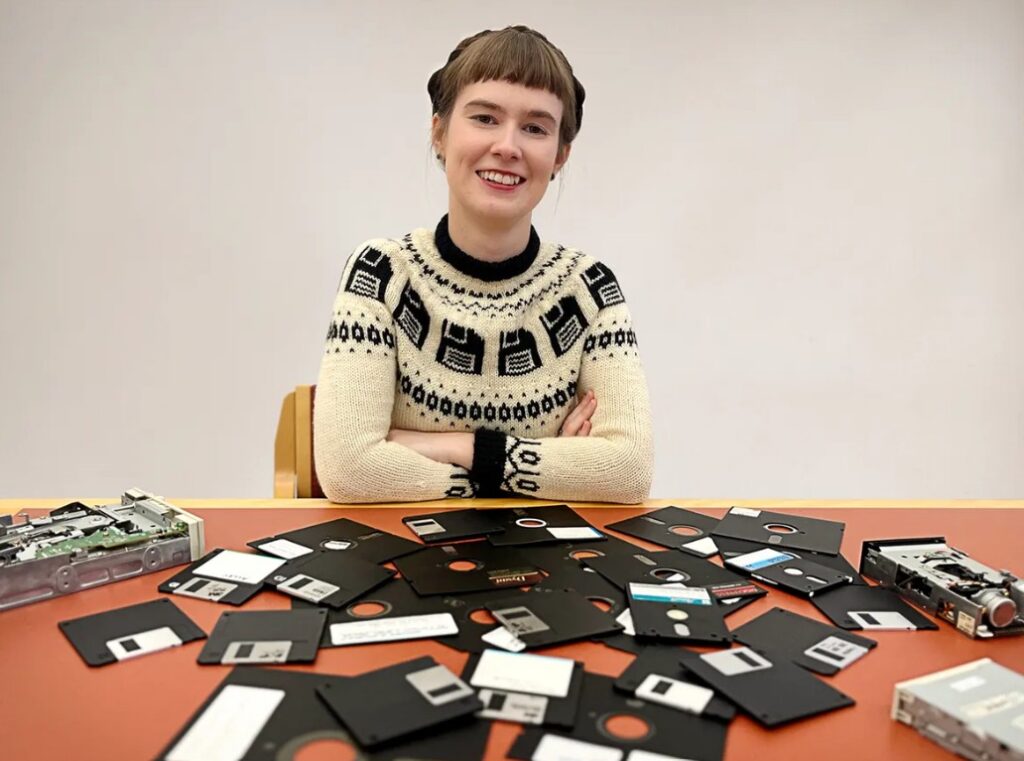
As modern technology rapidly advances, a growing challenge faces archivists and historians: preserving data stored on aging floppy disks before it becomes permanently inaccessible. An article in IEEE Spectrum explores the efforts of digital preservation specialists who are working to recover and safeguard information from obsolete storage media that once formed the backbone of personal and institutional computing.
Floppy disks were widely used from the 1970s through the 1990s, storing everything from business records and scientific research to personal correspondence and software. While many disks still physically exist, accessing the data they contain has become increasingly difficult. The hardware needed to read them is disappearing, replacement parts are scarce, and the magnetic media itself deteriorates over time. As a result, valuable digital records risk being lost even when the disks appear intact.
To address this problem, archivists have turned to specialized tools and techniques. Modern preservation projects often involve creating exact digital images of floppy disks, capturing not only files but also the underlying structure of the original media. This process allows researchers to reconstruct historical software environments and recover information that conventional file-copying methods might miss. Preservation specialists frequently rely on custom-built hardware, legacy computer systems, and open-source software developed specifically for digital archaeology.
The article highlights the broader significance of these efforts. Unlike paper documents, digital records depend on a complex combination of media, hardware, and software. Preserving a file is not enough if the programs required to interpret it no longer exist. Consequently, archivists increasingly focus on preserving entire computing ecosystems rather than individual pieces of data.
The challenge extends beyond nostalgia. Floppy disks contain important scientific datasets, government records, cultural artifacts, and early software that document the evolution of computing. Recovering these materials helps historians understand technological development and preserves knowledge that might otherwise disappear.
The work of digital archivists demonstrates that preserving the digital past requires as much ingenuity as preserving physical artifacts. As older storage formats continue to age, their efforts are becoming an essential part of safeguarding the history of the information age.
