

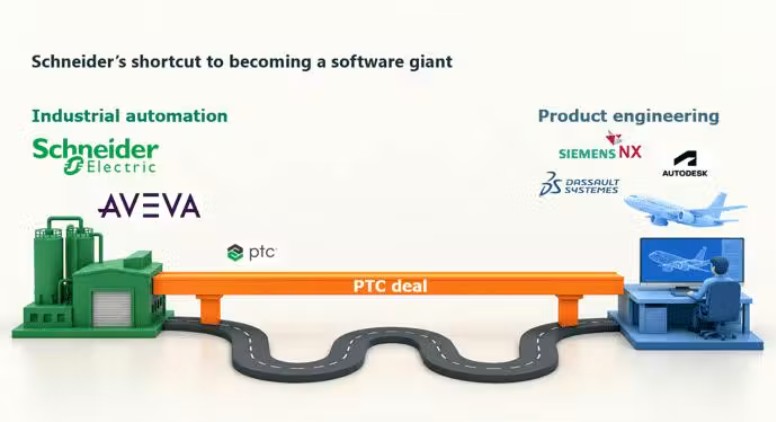
Schneider Electric plans to acquire PTC in an all-cash transaction valued at about $22.6 billion, bringing a major CAD and product lifecycle management software provider into its industrial technology portfolio. Announced October 5, the transaction is expected to close by the third quarter of 2027, pending regulatory and shareholder approvals, tells Machine Design.
For engineers, the deal could create tighter connections between product design information and real-world manufacturing and operational data. PTC contributes CAD, product lifecycle management, application lifecycle management, and service lifecycle management technologies, including Creo and Windchill. Schneider Electric already operates across automation, energy management, industrial software, and operational intelligence.
The acquisition follows PTC’s decision to sharpen its focus on product engineering and lifecycle management, including the sale of ThingWorx and Kepware to TPG. Schneider Electric, meanwhile, has expanded its software portfolio through acquisitions including AVEVA, RIB, ETAP, and OSIsoft.
Combining these technologies could create a more continuous digital thread spanning design and construction through operation and maintenance. Schneider Electric also sees contextualized engineering and operational data as a foundation for applying industrial AI across the product lifecycle.
The company says the combined portfolio will remain open and interoperable across hardware and software vendors. For manufacturers, this could improve connections among engineering intent, machine behavior, production information, and lifecycle data.
Integration will be the critical test. Schneider Electric must successfully connect PTC’s engineering technologies with its existing automation and industrial software platforms while competing with established engineering software companies.
Siemens remains particularly strong in advanced simulation and in linking design, production, and operational performance. The PTC acquisition gives Schneider Electric an opportunity to narrow that gap and build a broader industrial software platform.
PTC serves more than 30,000 customers and generated about $2.6 billion in 2025 revenue.
