

For decades, Moore’s Law provided the semiconductor industry with a reliable road map: transistor counts would roughly double every two years, delivering greater computing performance at lower cost. Combined with Dennard scaling, which allowed smaller transistors to operate without proportionally increasing power density, this pattern fueled advances in personal computers, mobile devices, cloud infrastructure, and artificial intelligence, tells Mouser Electronics blog.
That model is becoming increasingly difficult to sustain. As semiconductor features approach atomic dimensions, electron tunneling, leakage currents, heat dissipation, and manufacturing complexity are limiting traditional scaling. Advanced lithography techniques such as extreme ultraviolet lithography have also made leading-edge fabrication increasingly expensive. The result is that each new process node demands more engineering effort while providing smaller performance and efficiency gains.
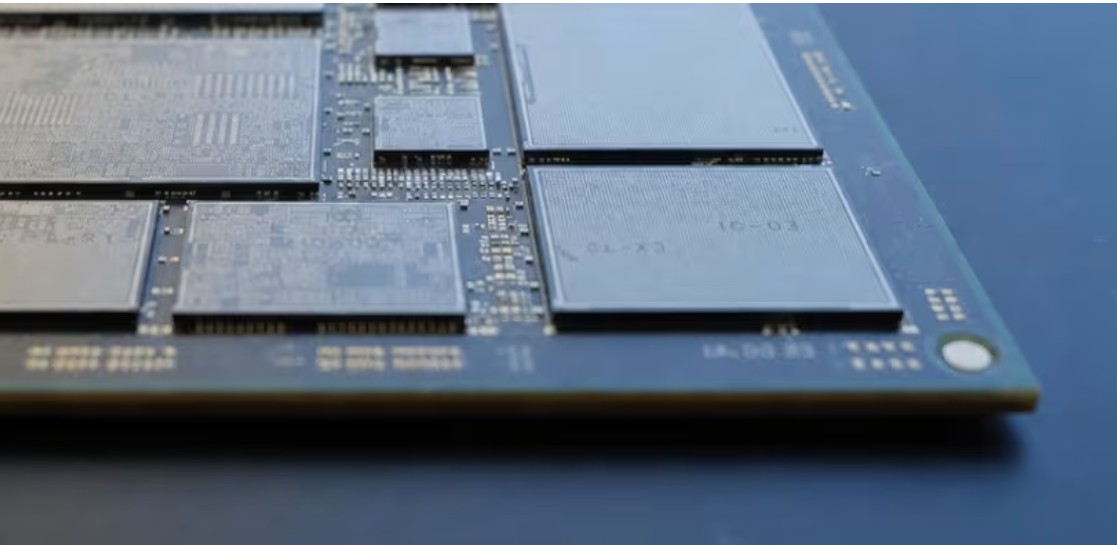
Rather than signaling the end of semiconductor progress, these constraints are changing where improvements come from. Chiplet-based architectures allow designers to combine smaller dies, including CPUs, GPUs, and memory, within a single package. This heterogeneous approach can improve manufacturing yields and enable designers to mix technologies without relying entirely on smaller transistors.
Transistor structures are evolving as well. FinFETs have given way to gate-all-around designs, including nanosheet and nanowire transistors, which provide better control over current and reduce leakage. Researchers are also investigating materials such as graphene and molybdenum disulfide, while gallium nitride and silicon carbide are already important in power and high-frequency applications.
Other gains are coming from specialized AI accelerators, GPUs, FPGAs, and 3D integration. Stacking dies can increase density, bandwidth, and efficiency without shrinking individual transistors. Hardware-software co-design, improved compilers, parallel processing, and AI-assisted optimization can extract additional performance from existing hardware.
Mouser concludes that Moore’s Law has not simply disappeared. Its role is evolving as semiconductor innovation shifts from transistor scaling toward architecture, packaging, materials, specialization, and system-level optimization.
