

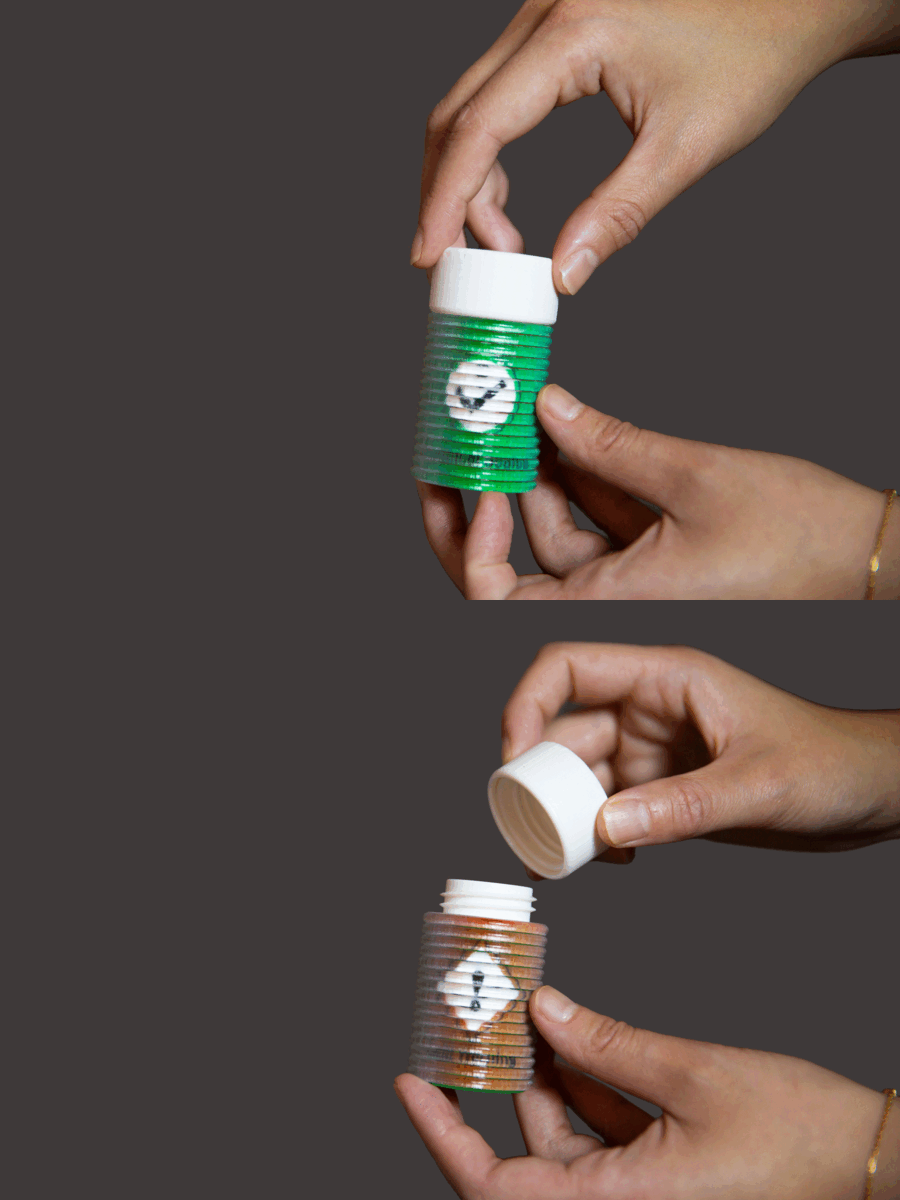
MIT researchers have developed ShiftLens, a design and fabrication system that enables 3D-printed objects to change their surface appearance when users press, slide, rotate, or otherwise manipulate them. The technology requires no sensors, screens, or electronic circuits, potentially making interactive objects more durable and easier to manufacture.
ShiftLens combines optical layers with built-in mechanical components so an object can display different images or patterns depending on its physical state. A layer of tiny lenticular lenses sits above a patterned backplane containing strips from multiple images. When movement shifts the layers relative to each other, the lenses reveal and magnify different portions of the underlying pattern, producing a visible change.
The system automatically converts a user’s design into a model ready for multimaterial 3D printing. Users provide images representing the desired visual states along with information about the object’s geometry. ShiftLens then coordinates the optical structures, mechanical linkages, and graphics needed to produce the effect. The complete object can be manufactured in a single printing process.
Researchers demonstrated the concept with several prototypes. A chemical bottle turns green and displays a check mark when its cap is securely tightened. When the cap is loose, it turns red and shows an exclamation mark. The team also created a tic-tac-toe game whose squares change among different visual states as users turn knobs.
Beyond consumer objects, ShiftLens could support weather-resistant warning signs, responsive packaging, rapid engineering prototypes, and industrial components. Piping, for example, could visually indicate a damaged connection responsible for a leak. The researchers now plan to reduce the number of inputs required to generate designs and expand the range of mechanical actuation methods supported by the system.
