

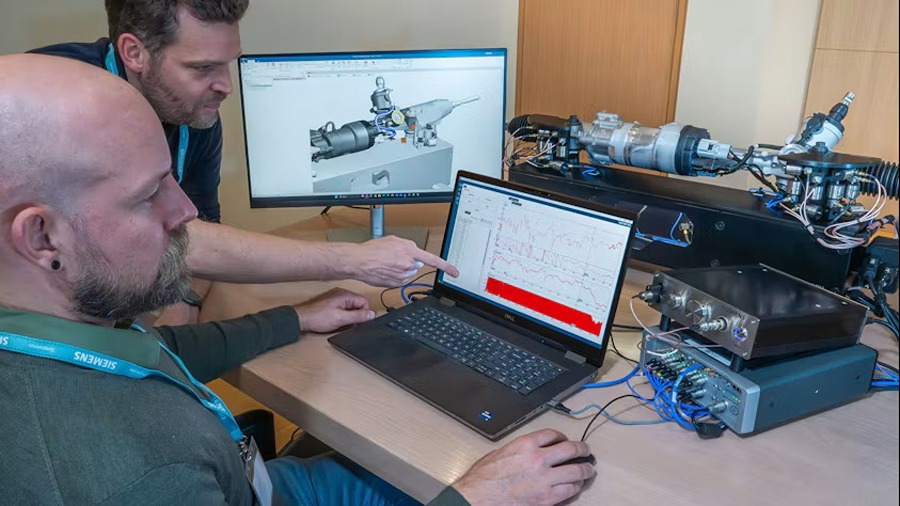
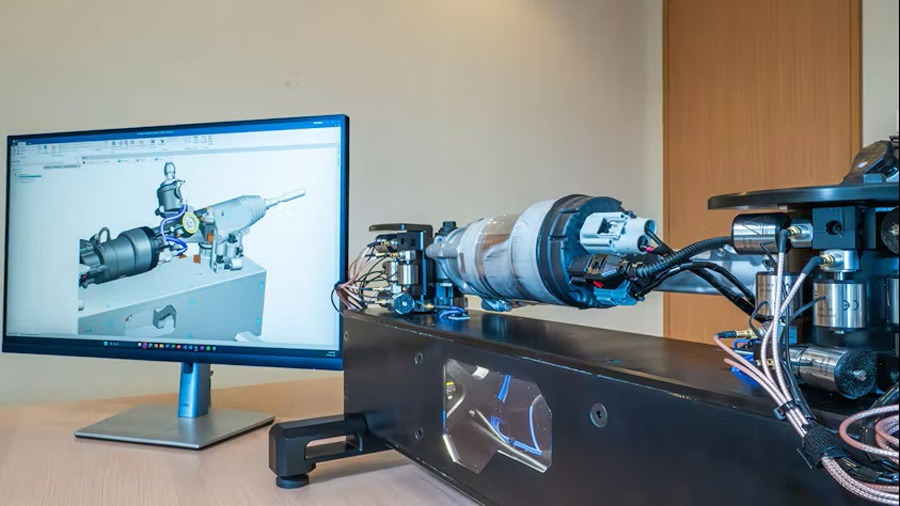
PLANO, TX, Nov 9, 2026 – Siemens has introduced an automated component model extraction solution that reduces noise, vibration and harshness (NVH) characterization of mechanical components. Developed with Bosch, the system combines automated testing hardware and software to perform blocked force extraction in accordance with ISO 20270 and generate component models for virtual prototyping.
The solution automates measurement and data processing, replacing manual procedures. The controlled, operator-independent workflow improves measurement consistency and produces simulation-ready models that engineers can reuse across multiple system variants.
The solution builds on Bosch’s predictiveVIA technology, with Siemens providing what it describes as the only industrialized implementation. It integrates automated test benches with dedicated software to characterize components and generate models for NVH prediction through virtual prototyping.
“Automated component model extraction helps customers turn a complex, expert-driven process into a scalable engineering capability,” said Sam Mahalingam, executive vice president and head of simulation software, Siemens. “By combining automated testing with simulation-ready workflows and high-quality noise and vibration data, engineers can shift their focus from collecting data to gaining insights from it, enabling greater confidence in NVH performance earlier in development.”
“Automated component model extraction brings the speed, precision, and consistency needed to industrialize blocked force testing,” said Christian Sperrle, director – product management; “Vehicle Motion” division, Bosch USA. “By enabling automated, repeatable measurements across global test facilities, it provides suppliers and OEMs with a common data foundation for digital NVH engineering. The result is faster decision making, more reliable virtual development, and a cost-effective path to large-scale blocked force testing that is independent of individual user expertise.”
Siemens reports that the automated process reduces frequency response function (FRF) measurement time by 93% compared with conventional methods. It also claims 100% accuracy and repeatability across component variants. The measurement data supports earlier system validation using digital twins. This approach can reduce dependence on physical prototypes and shorten product development cycles.
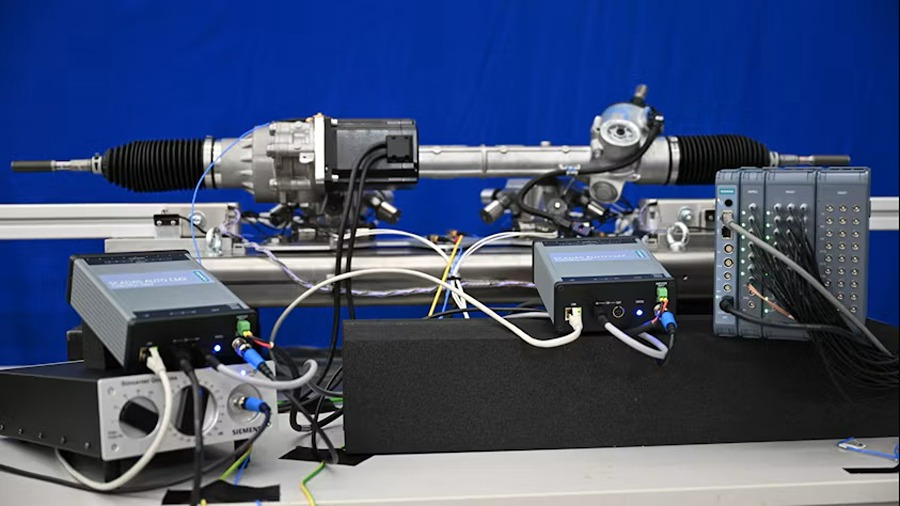
The automated component model extraction solution is part of Siemens’ Simcenter physical testing portfolio. It combines Simcenter Testlab software, Simcenter SCADAS hardware and Simcenter for Qsources hardware.
The system supports both test-based and computer-aided engineering (CAE)-based representations of mechanical components, including electric motors, pumps, compressors, steering systems and actuators. Engineers can use these models to predict NVH behavior during virtual system integration.
Source: Siemens
About Siemens Digital Industries Software

Siemens Digital Industries Software, a business unit of Siemens AG, provides industrial software, hardware and related services through the Siemens Xcelerator platform. The company’s portfolio includes product lifecycle management, electronic design automation, simulation and digital twin tools, manufacturing operations management and low-code application development. These products support design, engineering and production workflows across sectors such as aerospace and defense, automotive, electronics and semiconductors, machinery, medical devices and process manufacturing. Siemens Digital Industries Software traces its origins to 1963 as United Computing, later becoming Siemens PLM Software in 2007 before adopting its current name. It supplies technologies that help organizations manage product, process data, and improve development and manufacturing efficiency across a range of industrial applications.
