

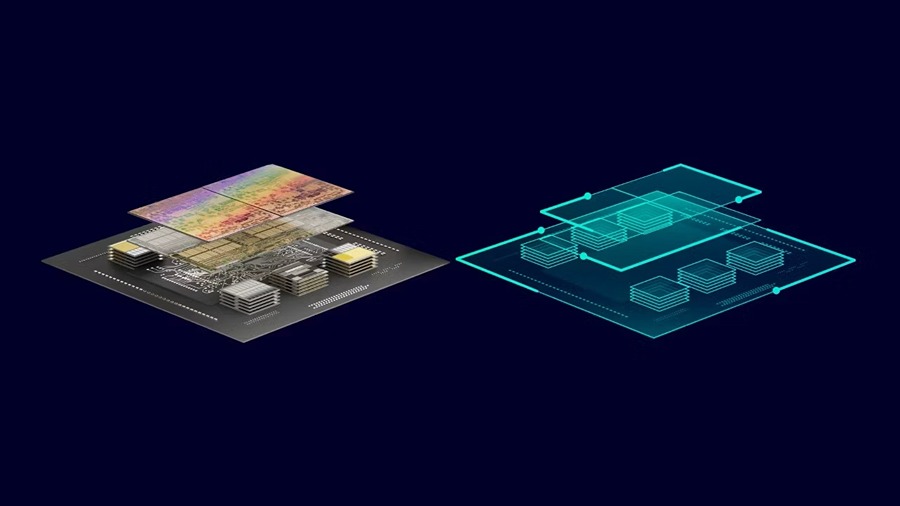
PLANO, TX, July 21, 2026 – Siemens has signed an agreement to acquire Precision Innovations, adding AI-powered chip planning technology to its EDA portfolio. The acquisition is aimed at helping semiconductor teams optimize power, performance, and area earlier in the system-on-chip (SoC) design process.
The acquisition adds AI-driven chip planning and design exploration capabilities to Siemens’ existing digital design and verification solutions, supporting faster feasibility analysis and more informed downstream design decisions.
Precision Innovations will join Siemens’ Digital Design Creation software group. The addition extends Siemens’ digital flow across architecture, implementation, and full silicon lifecycle management for systems-on-chip.
“With Precision Innovations joining Siemens, we will expand our ability to support customers as they face rapidly increasing SoC complexity and the need to explore new architectures faster and more efficiently,” said Ankur Gupta, executive vice president, IC Portfolio, Siemens EDA, Siemens Digital Industries Software. “Integrating Precision Innovations’ AI-powered early design exploration into our EDA portfolio can significantly accelerate time to silicon and improves power, performance and area.”
“Becoming part of Siemens allows us to scale our technology and bring AI-driven chip planning to a much broader set of semiconductor teams,” said Tom Spyrou, chief executive officer, Precision Innovations. “Together, we can help designers leverage AI to evaluate thousands of design options earlier in the process and focus innovation where it matters most.”
Source: Siemens AG
About Siemens AG

Siemens AG is a technology company founded in 1847 and headquartered in Munich and Berlin, Germany. The company develops products and services in industrial automation, electrification, digital systems, and mobility. Its offerings include automation systems, industrial software, building technologies, rail transport systems, and power distribution solutions. Siemens also provides financial services and supports infrastructure projects. It serves industries such as manufacturing, energy, transportation, construction, and healthcare. The company works with enterprises, utilities, governments, and infrastructure operators worldwide. Siemens operates in more than 190 countries. It applies digital tools and AI to industrial and infrastructure use cases. Siemens holds a majority stake in Siemens Healthineers, a publicly listed healthcare technology company. Siemens has about 318,000 employees globally.
About Siemens Digital Industries Software

Siemens Digital Industries Software, a business unit of Siemens AG, provides industrial software, hardware and related services through the Siemens Xcelerator platform. The company’s portfolio includes product lifecycle management, electronic design automation, simulation and digital twin tools, manufacturing operations management and low-code application development. These products support design, engineering and production workflows across sectors such as aerospace and defense, automotive, electronics and semiconductors, machinery, medical devices and process manufacturing. Siemens Digital Industries Software traces its origins to 1963 as United Computing, later becoming Siemens PLM Software in 2007 before adopting its current name. It supplies technologies that help organizations manage product, process data, and improve development and manufacturing efficiency across a range of industrial applications.
About Precision Innovations

Precision Innovations develops software and design tools for integrated circuit and system-on-chip (SoC) development. Founded in 2019, the company is headquartered in San Diego, CA. It develops OpenROAD-based electronic design automation (EDA) software for semiconductor design workflows. Its products support chip development from register-transfer level through physical implementation. The company also provides design flows, process design kits, engineering support and consulting services. Precision Innovations serves semiconductor companies, chip designers, research organizations and universities. It also works with application-specific integrated circuit and SoC developers. The company contributes to open-source EDA projects and commercial design software. Its engineering team develops software, validates design flows and supports customer deployments.
