

Aerodynamic simulation offers a way to improve marathon performance by helping runners conserve energy behind pacers. The Ansys article explains how computational fluid dynamics informed drafting strategies and anticipated the possibility of an official marathon finish under two hours.
Eliud Kipchoge’s earlier attempts established the importance of aerodynamic protection. He finished Nike’s 2017 Breaking2 event in 2:00:25, then completed the 2019 INEOS challenge in 1:59:40. However, the assistance used during the latter event prevented recognition as an official world record.
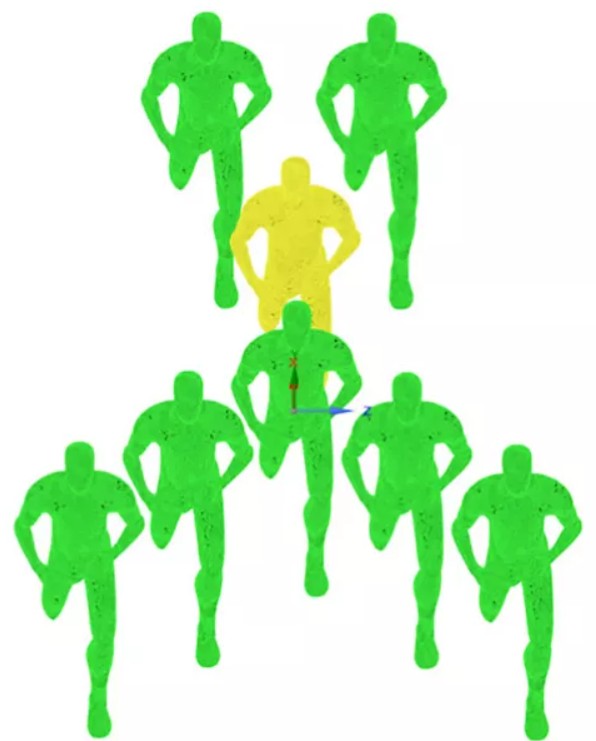
Researchers used Ansys Fluent to evaluate 12 running configurations at different speeds. Digital human models reproduced elite runners’ dimensions and posture, while simulations calculated air resistance around the main runner and pacers. Comparing formations showed that positioning matters as much as the number of athletes providing shelter. Running directly behind one pacer could reduce drag by approximately 43% compared with running alone.
The research combined aerodynamic calculations with models of running energy expenditure to estimate potential time savings. Its proposed strategy balanced the lead runner’s energy budget against the pacers’ ability to maintain speed. Keeping pacers involved longer extends protection, but slowing excessively to preserve them can undermine the finishing time. The resulting framework projected that Kipchoge could have completed his 2022 Berlin Marathon in 1:59:48 with improved drafting and pacing.
A separate analysis projected a possible 1:57:34 for Kelvin Kiptum, whose actual 2023 Chicago time was 2:00:35. These figures represent modeled possibilities rather than performances achieved on the road.
The article highlights Sabastian Sawe’s 1:59:30 London Marathon finish in April 2026, emphasizing his extended protection behind pacers. It argues that gains remain possible through optimized formations. However, the featured simulations lacked direct experimental validation and excluded external environmental factors, making their predictions conditional rather than guaranteed. For engineers, the story illustrates simulation’s role in evaluating tactics alongside physical capability.
