

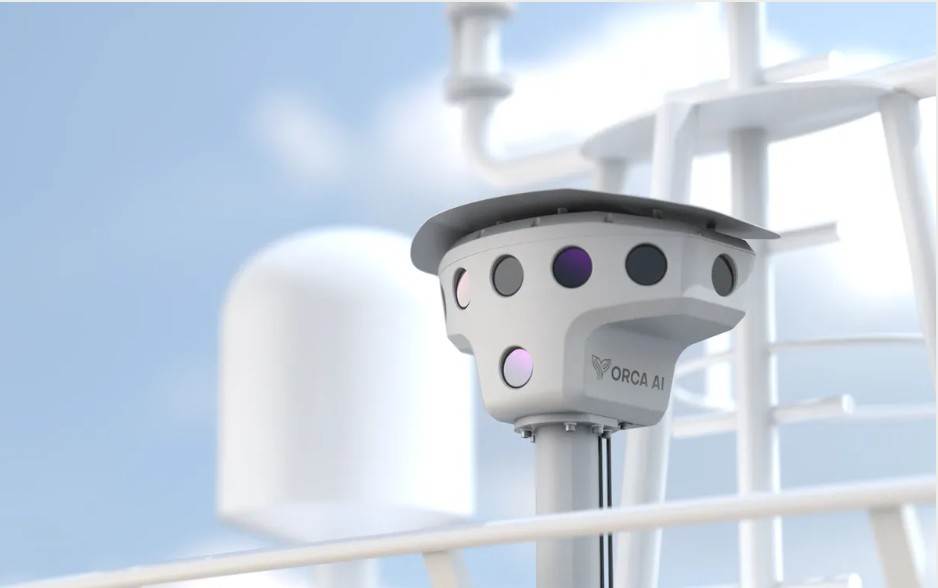
The maritime industry is adopting a networked approach to navigation and safety. The system builds on Orca AI’s existing SeaPod decision-support platform and extends it with Co-Captain: a cloud-connected module on each ship that both sends and receives data about sea conditions, vessel behavior, and environment, tells IEEE Spectrum.
Traditional maritime navigation relies on radar, Automatic Identification System (AIS), and Electronic Chart Display and Information System (ECDIS) to monitor other vessels and hazards. What Co-Captain adds is context: each ship becomes a node in a wider network, uploading sensor data, things such as pitch, roll, visibility, weather, and sea state, anonymized for privacy and aggregated. The platform uses this data to generate recommendations tailored to each vessel’s size, type, and current state. For example, if a nearby ship reports three-meter waves and heavy wind, Co-Captain can alert other vessels entering that zone with an adjusted risk profile and suggested action.
Orca AI positions Co-Captain as the “next generation of AIS” since it goes beyond simply broadcasting a ship’s identity and location. Instead, it fuses onboard sensor and vision data, applies AI to detect hazards (including non-AIS objects), and shares actionable insights across the fleet. The article reports that over 1,200 vessels are using the system.
From an engineering and operational perspective, the value lies in three areas: enhanced situational awareness, predictive hazard detection, and collective intelligence. Ship operators can reduce incident risk, optimize routes, and react more proactively rather than solely relying on manual watchkeeping. The article underscores that safety incidents have risen despite fewer collisions, partly due to aging vessels and equipment failures, making solutions like this increasingly relevant.
In sum, Co-Captain offers a model where each ship not only navigates but contributes to a real-time intelligence network, shifting maritime operations toward data-driven, cooperative safety systems.
