

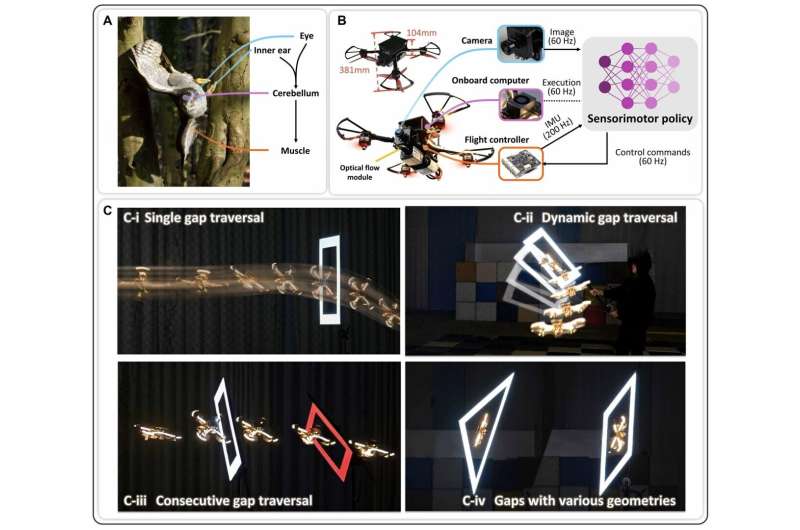
Researchers are developing new methods that could allow drones to operate more independently by running artificial intelligence directly on board rather than relying heavily on cloud computing or remote control systems. The work addresses one of the key limitations of autonomous aerial vehicles: balancing the computational demands of AI with the limited processing power, energy capacity, and weight constraints of small drones, tells Tech Xplore.
Modern drones increasingly depend on AI for tasks such as navigation, obstacle avoidance, object detection, target tracking, and environmental monitoring. However, many advanced AI models require substantial computing resources. Sending data to external servers for processing introduces communication delays, increases power consumption, and can become problematic in environments with unreliable network connections. For drones operating in remote areas, disaster zones, or military settings, these delays can reduce effectiveness and safety.
The research focuses on narrowing the gap between the capabilities of powerful AI models and the limited hardware available on unmanned aerial vehicles. By optimizing machine-learning algorithms and designing systems that intelligently distribute computing workloads, researchers aim to enable drones to process information in real time while consuming less energy. This allows aircraft to react more quickly to changing conditions and make critical decisions without waiting for instructions from a remote computer.
A major aspect of the work involves developing AI systems that can adapt to the resources available on the drone. Instead of relying on a single large model, the technology can select computational approaches based on mission requirements, available power, and environmental conditions. This flexibility helps improve performance while extending flight duration.
The advances could benefit a wide range of applications, including infrastructure inspection, environmental monitoring, agriculture, search-and-rescue operations, package delivery, and emergency response. Faster onboard decision-making would allow drones to navigate complex environments more effectively and operate in locations where communications networks are limited or unavailable.
Researchers believe that continued improvements in edge computing, AI optimization, and energy-efficient hardware will further enhance drone autonomy. As these technologies mature, future drones may be capable of carrying out increasingly sophisticated missions with minimal human intervention, expanding their usefulness across commercial, scientific, and public safety applications.
