

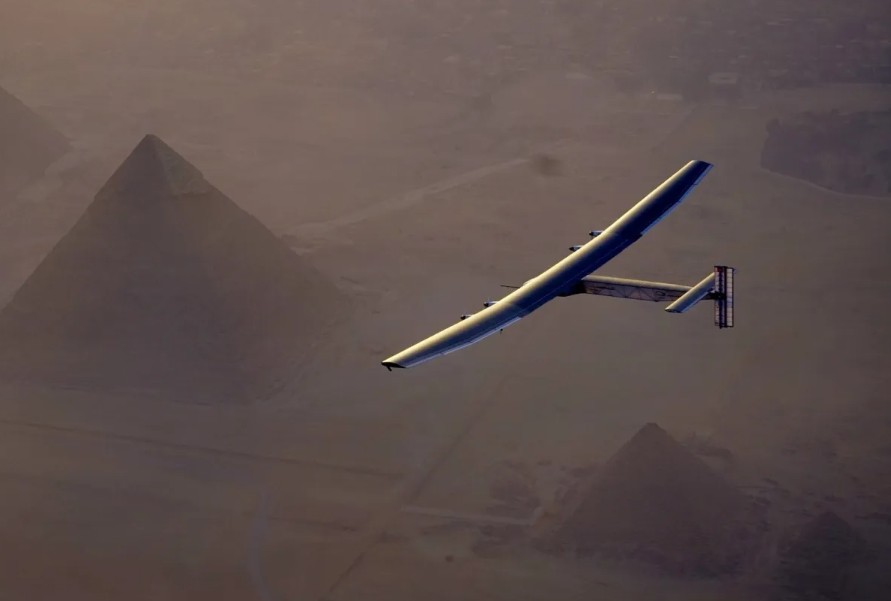
The experimental aircraft Solar Impulse 2, celebrated for completing the first round-the-world flight powered entirely by solar energy, has crashed into the Gulf of Mexico during an autonomous test mission. The Popular Science article describes the accident as the end of one of aviation’s most symbolic clean-energy projects, though its technological legacy continues to influence the future of sustainable aerospace development.
Originally conceived in 2003 by Swiss explorer Bertrand Piccard, Solar Impulse was never intended to become a commercial passenger aircraft. Instead, the project aimed to demonstrate that renewable energy and advanced engineering could achieve feats once considered impossible. The second aircraft, Solar Impulse 2, featured a massive 232-foot wingspan, wider than a Boeing 747, while weighing only about as much as an SUV due to its lightweight carbon-fiber structure. More than 17,000 photovoltaic cells powered four electric motors and charged onboard lithium-ion batteries that enabled day-and-night operation.
In 2015 and 2016, Piccard and co-founder André Borschberg piloted Solar Impulse 2 around the globe across 17 flight segments. The historic journey took more than 16 months and proved that long-distance aviation without fossil fuels was technically possible, even if not yet commercially practical. The aircraft traveled at relatively slow speeds, often reducing power at night to conserve energy, but the mission captured worldwide attention as a symbol of renewable innovation.
The article explains that Solar Impulse 2 entered a new chapter in 2019 after being sold to Skydweller Aero, a company focused on autonomous and military-related applications. The aircraft was modified into an uncrewed solar-powered drone intended for long-endurance surveillance missions. Following additional autonomous flight testing, the aircraft reportedly lost power during a May 4 mission over the Gulf of Mexico and crashed into the water. No injuries or fatalities occurred because the flight was unmanned.
Despite the crash, the article frames Solar Impulse 2 as a landmark achievement in experimental aviation. Its developers viewed the aircraft less as a practical transport solution and more as a demonstration of what future clean technologies could accomplish. The plane’s destruction closes a remarkable chapter in aerospace history, but its influence on electric aviation, solar flight research, and sustainable engineering remains significant.
