

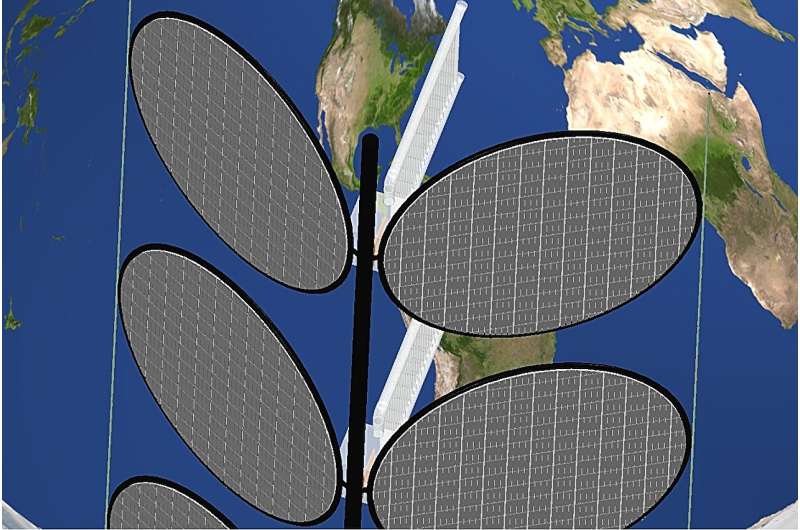
Penn Engineers have proposed a space-based system that could support artificial intelligence computing at scale by combining abundant solar energy with a passive tether design for orbital data centers. The concept responds to the growing power and cooling demands of Earth-bound data hubs, which strain local grids and raise environmental concerns. Placing computing infrastructure in orbit exploits near-continuous sunlight and the cold vacuum of space, potentially offering a more sustainable way to run AI workloads, tells Tech Xplore.
The architecture centers on solar panels integrated with a chain of connected computing nodes suspended by a passive tether. This layout could deliver a steady stream of photovoltaic power to thousands of processors needed for inference tasks, such as running large language models and other AI services, without relying on fossil-fuel-intensive electricity sources on the ground. Continuous sunlight in certain orbits boosts energy generation, and radiative cooling in the space environment would reduce thermal management burdens.
This space approach also mirrors broader industry interest in orbital computing. Tech giants and startups alike are exploring solar-powered satellites equipped with AI accelerators to overcome terrestrial limits on power and cooling. Solar irradiance above Earth’s atmosphere can be several times stronger than on the surface, increasing the efficiency of energy collection for orbiting data centers.
Building such infrastructure still faces major engineering hurdles. Designers must manage heat without air, protect hardware from radiation, and ensure that thousands of interconnected satellites or tethered nodes function reliably. But early studies and architectural proposals, such as the passive tether system, show a path toward meeting AI demand without worsening terrestrial resource challenges.
If realized, this orbit-based model could redefine how and where AI is powered, shifting some of the most energy-intensive computing off Earth and tapping near-unlimited solar energy in space.
