

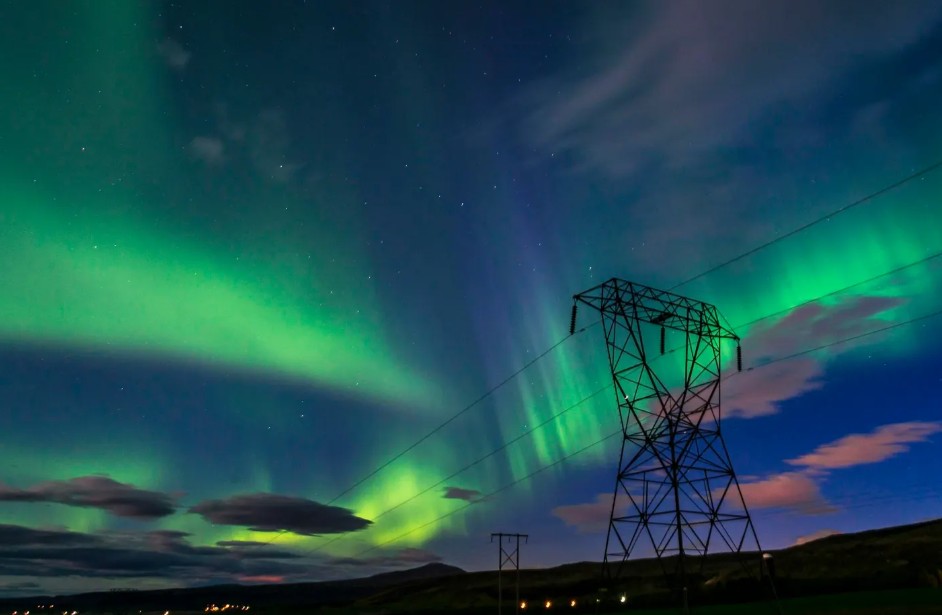
A powerful solar storm may seem like an unlikely concern for city planners and utility operators, yet it represents one of the most serious natural threats to modern electricity networks. The Forbes article examines this overlooked risk through the lens of a large-scale simulation conducted by New Zealand’s electricity grid operator, Transpower, to test the nation’s readiness for an extreme space weather event.
The exercise simulated a severe geomagnetic storm triggered by a coronal mass ejection (CME), a massive eruption of plasma and magnetic fields from the Sun. Unlike solar flares, which primarily disrupt communications, CMEs can interact with Earth’s magnetic field and generate geomagnetically induced currents (GICs). These currents can flow through power transmission networks, damaging critical infrastructure and potentially causing widespread blackouts.
New Zealand faces particular vulnerability because of its geographic location, north-south grid orientation, and conductive volcanic geology. During a major solar event, GICs can saturate transformers, causing overheating and permanent damage. Replacing these large, custom-built components can take months or even years, especially if multiple countries are affected simultaneously. A severe storm could therefore have long-lasting economic and societal consequences.
To reduce these risks, Transpower has developed mitigation strategies that include installing GIC blockers and temporarily disconnecting vulnerable transformers during extreme events. Economic analysis cited in the article suggests that a severe but realistic solar storm could cost New Zealand up to NZ$8.36 billion in lost GDP if protective measures were not implemented.
The article also highlights the close collaboration between Transpower and researchers at the University of Otago. Over more than a decade, scientists have developed models capable of predicting the impact of solar storms on the national grid, enabling operators to make informed decisions during emergencies. Simulation exercises help transform scientific knowledge into practical action, ensuring that utilities, government agencies, and industry stakeholders can respond effectively when a real event occurs.
As solar activity remains elevated during the current solar cycle, the article argues that preparation is essential. New Zealand’s experience demonstrates that resilience against space weather depends not only on technology but also on planning, coordination, and a strong partnership between science and infrastructure operators.
