

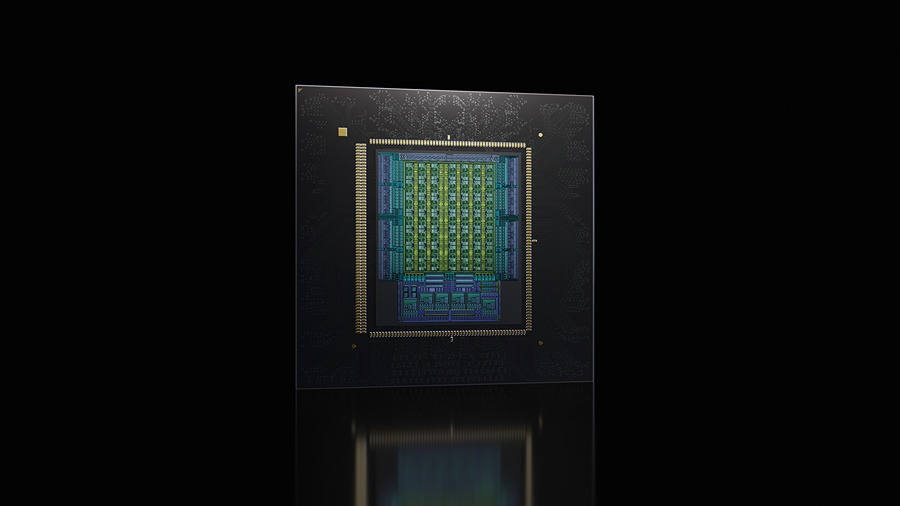
SpaceXAI plans to deploy NVIDIA Vera CPUs for the orchestration, code execution, data processing and simulation workloads used by agentic AI applications. NVIDIA describes Vera as a CPU designed for AI agents.
SpaceXAI also plans to expand the infrastructure behind Grok on NVIDIA Vera Rubin. Its first-generation Starmind AI satellite is planned to use NVIDIA Vera Rubin NVL72 rack-scale system.
“Agentic AI requires a new kind of computing system – one built not only to generate answers, but to take action,” said Ian Buck, vice president of hyperscale and high-performance computing at NVIDIA. “Vera gives AI agents the CPU performance to act in real time – executing code, processing data and coordinating complex tasks. SpaceXAI is taking this architecture from massive AI factories to the next frontier of computing in orbit.”
“Vera gives us the CPU performance and memory bandwidth to run enormous amounts of orchestration, code and data processing while keeping GPUs doing what they do best,” said Mike Nicolls, president of SpaceXAI. “That means higher-performance AI agents and more useful work from every watt of compute.”
Vera CPU Specifications and Agent Workloads
NVIDIA describes Vera as a CPU designed for AI-agent workloads that run around model inference. The processor has 88 NVIDIA-designed Olympus cores, NVIDIA Spatial Multithreading technology and LPDDR5X memory with up to 1.2 TB/s of bandwidth. Vera can complete tasks up to 1.8 times faster than x86 CPUs in agentic AI, reinforcement learning and data-processing workloads.
In agentic AI applications, CPUs manage tasks that do not run on the model itself, such as coordinating external tools, executing code, processing data and running simulations. SpaceXAI plans to use Vera for those workloads while GPUs run model workloads.
Vera Rubin Infrastructure for Grok
The NVIDIA Vera Rubin platform combines NVIDIA accelerated computing, NVLink interconnect technology, Spectrum-X Ethernet networking, BlueField data processing and NVIDIA software. SpaceXAI plans to use the platform as it expands its computing capacity toward gigawatt scale.
Starmind Satellite Project
The Starmind satellite would use Vera Rubin NVL72 system in orbit. NVIDIA and SpaceXAI are adapting the system for orbital requirements involving power, thermal management, bandwidth, reliability and physical integration.
Source: NVIDIA
About NVIDIA

NVIDIA, founded in 1993 and headquartered in Santa Clara, CA, designs and manufactures graphics processing units, systems on chips, networking hardware, and AI intelligence software such as CUDA. Its products serve industries including gaming, data centers, autonomous vehicles, professional visualization, robotics, health care, and energy. The company introduced the GPU in 1999 and later expanded into accelerated computing and AI infrastructure. In gaming, its GPUs support high-performance rendering, while in AI and high-performance computing, its systems provide the infrastructure for training and deploying large-scale models. NVIDIA also develops tools for robotics and autonomous driving.
About SpaceXAI

SpaceXAI develops artificial intelligence models, consumer applications and business software. Founded as xAI in 2023, the company adopted its current name after SpaceX acquired it in 2026. Grok, its main product, provides text and voice responses, web search, coding assistance, image generation, editing and media analysis. SpaceXAI also sells API access and business subscriptions for developers and organizations using its models. The company operates Colossus, an AI model training facility in Memphis, TN. It serves individual users, developers, businesses, researchers and institutions in software, education, transportation, media, retail and scientific research. Grok is available through web and mobile applications and selected third-party platforms. SpaceXAI also develops voice systems, reasoning models and generative media tools. The company has offices in Palo Alto, California; Seattle; Memphis; and London.
