

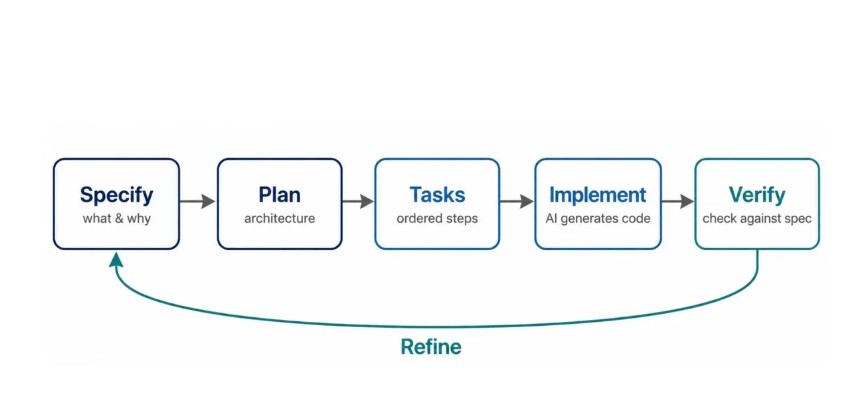
Artificial intelligence is reshaping embedded software development, but its effectiveness depends on the quality of the instructions it receives. The Design News article argues that engineers should adopt spec-driven development, a methodology that captures requirements before any code is generated. Rather than relying on informal prompts, developers create structured specifications that clearly define a system’s functionality, constraints, and expected behavior. These specifications become the foundation for AI coding agents, reducing ambiguity and ensuring they generate software that aligns with engineering intent.
The author explains that vague prompts often produce code that compiles successfully but fails to satisfy critical design requirements. Timing constraints, hardware limitations, safety considerations, and performance expectations often go unstated, leading AI to solve a different problem than the engineer intended. Spec-driven development addresses this issue by documenting intent first, shifting the engineer’s role from manually writing code to reviewing and verifying AI-generated output against predefined requirements.
This approach complements established practices such as test-driven development (TDD) and behavior-driven development (BDD). Instead of replacing these methods, spec-driven development provides an earlier stage that defines what the software should accomplish before implementation begins. Once specifications are complete, AI tools can generate architecture, code, documentation, and tests that trace directly back to the original requirements, improving consistency and reducing rework.
The article emphasizes that successful AI-assisted development still requires experienced engineers. AI can accelerate coding and automate repetitive tasks, but it cannot infer missing requirements or make sound engineering judgments without clear guidance. Verification, validation, and human oversight remain essential, particularly for embedded systems where software interacts directly with hardware and reliability is critical.
Ultimately, the article presents spec-driven development as a practical framework for integrating AI into engineering workflows. By treating specifications as the primary source of truth, engineering teams can improve software quality, maintain traceability from requirements to implementation, and use AI as a productive collaborator rather than an autonomous replacement for human expertise.
