

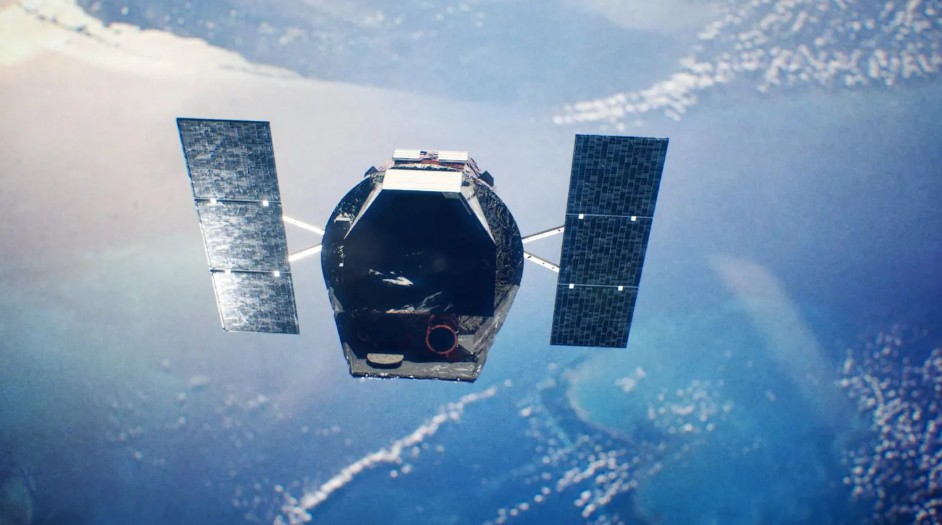
NASA is preparing an ambitious effort to save the Neil Gehrels Swift Observatory, a space telescope that has spent more than 20 years detecting some of the universe’s most energetic events. Launched in 2004 to study gamma-ray bursts, Swift remains a valuable scientific asset, but atmospheric drag, intensified by recent solar activity, is steadily pulling it closer to Earth. Without intervention, the observatory is expected to eventually burn up in the atmosphere, tells Forbes.com.
Swift has detected more than 2,000 gamma-ray bursts and contributed significantly to scientists’ understanding of the origins of heavy elements such as gold and platinum. Its ability to rapidly respond to sudden cosmic events makes it an essential complement to larger observatories such as the James Webb Space Telescope and the Hubble Space Telescope, which require more time to reposition. Because of this unique capability, NASA considers Swift an indispensable first responder for transient astronomical phenomena.
To preserve the observatory, NASA awarded a contract to Arizona-based Katalyst Space Technologies in September 2025. The company developed a robotic servicing spacecraft called LINK, designed to rendezvous with Swift, capture it, and boost it into a higher, safer orbit. The mission is notable for its speed. Katalyst designed, built, tested, and prepared the spacecraft for launch in just 250 days, a remarkably short development cycle for a space mission.
LINK is equipped with electric propulsion, rendezvous sensors, robotic arms, reaction-control thrusters, and sophisticated proximity-operation software. After launch, the spacecraft will approach Swift, secure it, and gradually raise its orbit over several months. The mission faces significant technical risks, particularly given the compressed schedule and the complexity of autonomous orbital operations.
If successful, the mission could allow Swift to resume scientific observations later this year. More broadly, it would demonstrate the feasibility of robotic satellite servicing, opening the door to a future in which aging spacecraft can be repaired, upgraded, repositioned, or rescued rather than abandoned. For Katalyst, the project is also an opportunity to prove that agile commercial companies can rapidly develop solutions to urgent challenges in space exploration.
