

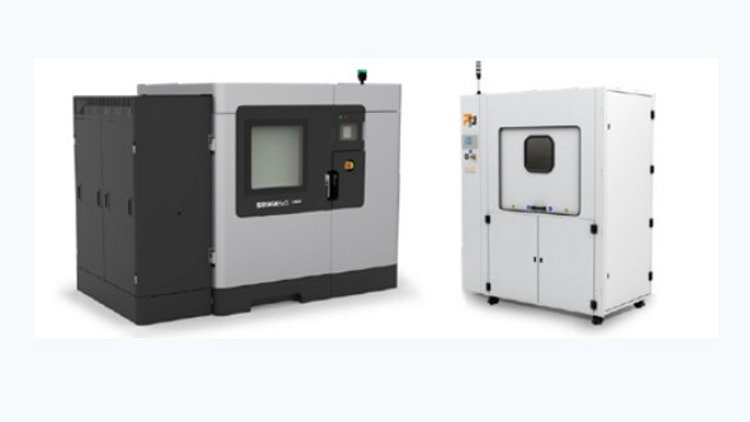
MINNETONKA, MN and REHOVOT, Israel, Jan 27, 2026 – Stratasys has launched the Post Processing Partnership Program to simplify access to validated post-processing solutions within additive manufacturing workflows. Stratasys also signed a new commercial agreement with PostProcess Technologies, the program’s first participating partner.
Post-processing is one of the more complex stages in additive manufacturing and often relies on manual steps such as cleaning, resin removal, support removal, smoothing, and curing, frequently involving multiple vendors. Customers source and integrate these technologies on their own. The Post Processing Partnership Program aims to simplify evaluation, selection, and purchase of post-processing solutions.
Stratasys is centralizing access to validated post-processing solutions by integrating third-party offerings into its sales channels. Customers can purchase post-processing equipment alongside Stratasys printers, software, materials, and services. The approach simplifies procurement and reduces integration risk.
“Customers are increasingly focused on optimizing the entire additive manufacturing workflow, not just individual steps, and the Post Processing Partnership Program is designed to make post-processing easier to adopt and better integrated into production environments,” said Rich Garrity, chief industrial business officer at Stratasys. “PostProcess Technologies is a great fit for this program because they are a well-established partner with a strong reputation, and many of our customers already rely on their solutions today. This agreement builds on that foundation and brings unique value to the market.”
Stratasys will offer validated post-processing solutions from PostProcess Technologies through its global sales channels. Customers can purchase post-processing equipment and Stratasys systems under a single purchase order. PostProcess Technologies will provide installation, service, and ongoing support.
“Our solutions are widely used across prototyping and production environments where operator safety, consistency, and throughput are critical. As part complexity and volumes continue to grow, traditional tools and manual finishing methods do not scale,” said Jeff Mize, CEO of PostProcess Technologies. “This agreement deepens our alignment with the clear industry leader, extending our commercial reach and making it easier for customers to deploy proven post-processing solutions as part of a unified additive manufacturing workflow.”
PostProcess Technologies supports multiple Stratasys technologies, including FDM, PolyJet, SLA, and P3, with automated post-processing systems. The solutions support consistent part output across prototyping and production workflows. Automotive, aerospace, dental, and consumer goods manufacturers use these systems to manage post-processing, a major contributor to additive manufacturing time and cost.
Source: Stratasys
About Stratasys

Stratasys Ltd., founded in 1989 by S. Scott Crump, develops additive manufacturing and 3D printing solutions using polymer-based materials. The company is headquartered in Eden Prairie, MN, and Rehovot, Israel. Its offerings include 3D printers, consumable materials, and software tools used in aerospace, automotive, healthcare, and consumer goods industries. Stratasys technology supports the production from materials such as ABS, polyphenylsulfone (PPSF), and polycarbonate. Till date, the company served approx. 35,000 customers worldwide.
About PostProcess Technologies

PostProcess Technologies is a U.S.-based developer of automated post-processing solutions for additive manufacturing. Founded in 2014, the company is headquartered in Buffalo, NY. It designs and produces hardware, software, and chemical systems that automate support removal, resin cleaning, surface finishing, and powder removal for 3D printed parts. Its products serve manufacturers in aerospace, automotive, defense, medical, dental, and consumer goods industries. The company’s systems help standardize post-print workflows and reduce manual handling of printed components. Its technologies integrate with a range of industrial 3D printing platforms. Engineering, product development, and customer support operations are based at its Buffalo headquarters, with regional teams supporting sales and service.
