

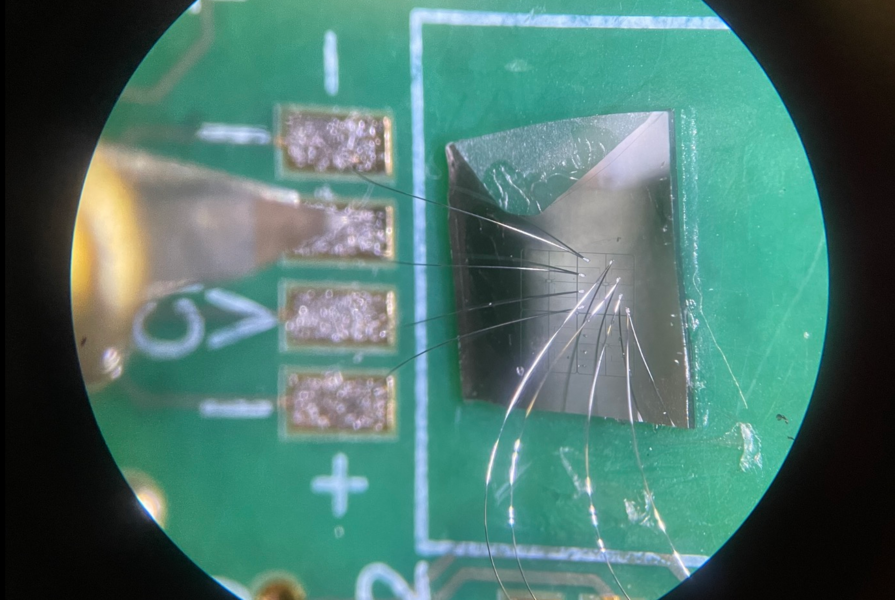
As artificial intelligence (AI), supercomputing, and data centers drive growing electricity demand, researchers are exploring alternative computing architectures that consume less energy without compromising performance. Scientists at MIT’s Plasma Science and Fusion Center have developed a miniature superconducting device that could address a major obstacle to energy-efficient computing: memory.
Superconducting computers offer the potential for faster information processing with minimal electrical resistance and reduced heat generation. However, developing high-capacity memory that operates reliably at cryogenic temperatures remains a significant engineering challenge.
Led by senior research scientist Jagadeesh Moodera, alongside postdoctoral researcher Josep Ingla-Aynés, the MIT team developed a layered structure consisting of an ultrathin superconducting film enclosed between two magnetic layers.
The device stores binary information through changes in magnetic orientation. Opposing magnetic orientations enable resistance-free current flow, while matching orientations introduce electrical resistance. Researchers switch between these states using a magnetic field and a brief electrical heating pulse.
Unlike conventional volatile memory, the device retains information without a continuous power supply to maintain each bit, although cryogenic cooling remains necessary. Experiments also demonstrated that individual memory cells could be rewritten independently without disturbing neighboring cells.
Another significant feature is the device’s ability to function as a programmable superconducting diode at lower temperatures. By adjusting magnetic orientations, researchers can direct or block electrical signals, potentially integrating memory and signal management within a single chip.
The technology could support energy-intensive AI applications and classical control electronics for quantum computers. Its ability to operate near quantum processors could also help minimize thermal and electromagnetic disturbances.
However, practical implementation requires further miniaturization, integration into large memory arrays, and comprehensive evaluation of system-level energy savings.
The research highlights the potential of combining superconductivity and magnetism to rethink conventional computing hardware. It represents an important step toward addressing memory-related bottlenecks and developing faster, more energy-efficient computing architectures for future technological applications.
