

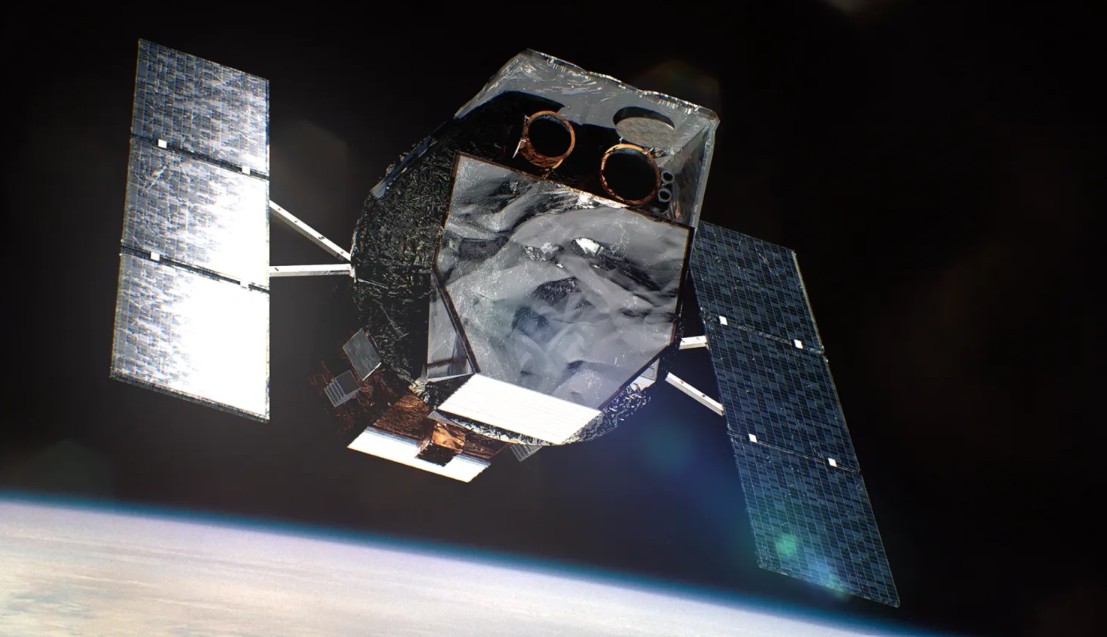
NASA’s Neil Gehrels Swift Observatory has resumed scientific observations after spending months in a reduced operating mode while engineers attempted to save the spacecraft from its steadily decaying orbit. On August 26, NASA reactivated Swift’s Ultraviolet/Optical Telescope and X-ray Telescope. Its third instrument, the Burst Alert Telescope, remains offline, although engineers hope to restore it soon, tells Popular Science.
Launched in 2004, Swift was designed to study gamma-ray bursts, some of the universe’s most powerful explosions. Unlike many satellites, however, Swift lacks its own propulsion system for maintaining altitude. Increased solar activity has expanded Earth’s upper atmosphere, creating additional drag and causing the observatory to lose altitude faster than expected.
NASA shut down Swift’s scientific instruments in February to extend the spacecraft’s remaining orbital life. In 2025, the agency selected Katalyst Space Technologies to develop Link, a spacecraft intended to capture Swift and raise it into a higher orbit.
That rescue attempt ended on August 19 after Link entered an uncontrollable spin. Although the mission could not save Swift, Katalyst continued testing Link’s technologies in orbit. The spacecraft performed maneuvers and tested its xenon-fueled thrusters while gathering information that could support future satellite-servicing missions. It also approached within roughly nine miles of Swift and captured images of the observatory.
With the rescue abandoned, NASA has restarted Swift’s instruments to collect as much scientific data as possible during its remaining time in orbit.
NASA expects Swift to reach an altitude of about 185 miles within one or two months. Below that level, operating the telescope will become increasingly difficult as its descent accelerates.
Swift is currently expected to reenter Earth’s atmosphere sometime between October and late December. Until then, the observatory has one final opportunity to contribute to astronomy after more than two decades of studying the high-energy universe.
