

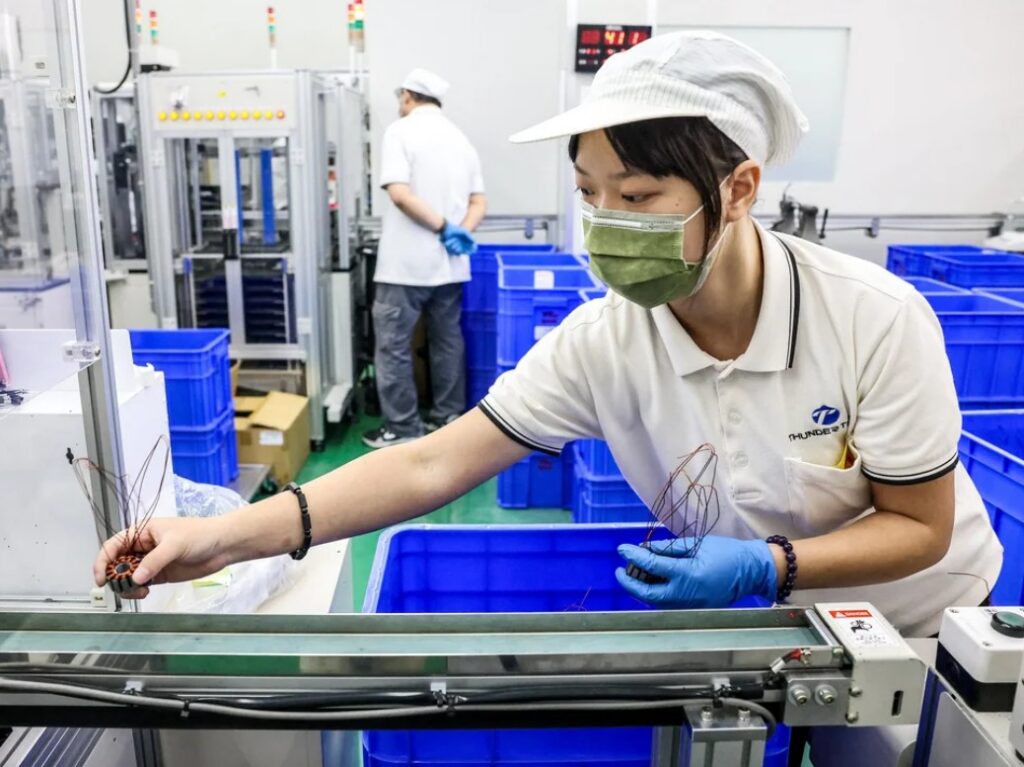
A report from IEEE Spectrum examines Taiwan’s growing effort to establish an independent drone manufacturing ecosystem as global concerns rise over dependence on Chinese technology. The initiative is driven by both economic opportunity and national security considerations, particularly as drones become increasingly important in defense, surveillance, logistics, agriculture, and industrial inspection.
Taiwan’s challenge is substantial because China currently dominates much of the global drone supply chain, especially in commercial platforms and critical components such as batteries, motors, radio systems, cameras, and flight controllers. Companies such as DJI have built overwhelming market influence through scale, pricing, and manufacturing efficiency. Taiwanese officials and industry leaders now see strategic risk in relying too heavily on Chinese-made systems, particularly amid escalating geopolitical tensions in the Asia-Pacific region.
The article explains that Taiwan is attempting to position itself as a trusted alternative supplier by combining its strengths in semiconductors, electronics manufacturing, and precision engineering. Government-backed programs are encouraging collaboration among local firms to develop domestic capabilities across drone hardware, software, communications systems, and autonomous flight technologies. The effort mirrors broader international attempts to diversify technology supply chains away from concentrated manufacturing hubs.
Military lessons from Ukraine also play an important role in shaping Taiwan’s urgency. Modern conflicts have demonstrated that inexpensive drones can influence battlefield intelligence, targeting, and asymmetric warfare strategies. Taiwan views drone resilience and local production capacity as increasingly essential to its own defense planning.
At the same time, the report notes that building a competitive drone ecosystem involves more than assembling aircraft. Companies must establish reliable sourcing networks, certification standards, cybersecurity protections, and scalable manufacturing infrastructure. Taiwanese firms are also trying to gain credibility in international markets where buyers seek secure and politically reliable suppliers.
The article presents Taiwan’s drone ambitions as part of a larger technological realignment in which nations are reassessing the risks of concentrated supply chains and redefining strategic independence through advanced manufacturing and autonomous systems development.
