

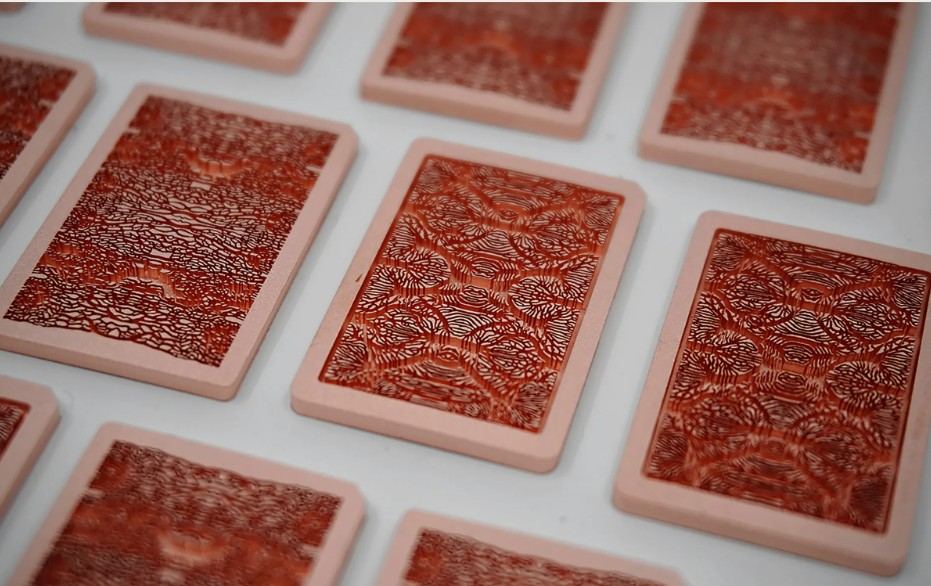
As AI chips become ever more demanding, cooling them by traditional air or generic liquid methods is reaching its limits. According to a recent article in IEEE Spectrum, Swiss startup Corintis is advancing microfluidic cooling systems that route coolant directly to the exact portions of a chip generating the most heat.
Typical rack densities in data centers have jumped from around 6 kW per rack eight years ago to several hundred kW today and are approaching the megawatt mark soon. Corintis’s approach involves etching hair-thin channels (around 70 µm wide) into cold plates (and eventually into the chip package itself), mirroring nature’s vascular networks. Coolant flows precisely where it’s needed rather than treating the chip as a uniform block.
In tests with Microsoft, the cooling technique reduced chip temperatures by more than 80% compared to conventional air cooling and removed heat up to three times more efficiently. Lower temperatures allow chips to run faster with fewer errors, and also make data centers more energy-efficient (since less cooling infrastructure is required).
Corintis is scaling production, aiming to ramp from tens of thousands to a million cold plates per year by 2026. Meanwhile, they’re working with chip makers to potentially embed micro-channels directly inside silicon packages, a step that could unlock major leaps in compute density and performance.
For engineers designing AI hardware and data-center infrastructure, the implication is clear: cooling will no longer be a passive add-on. It will be an integral part of chip architecture and rack design. The next frontier won’t just be “bigger chips” but “smarter cooling” too.
