

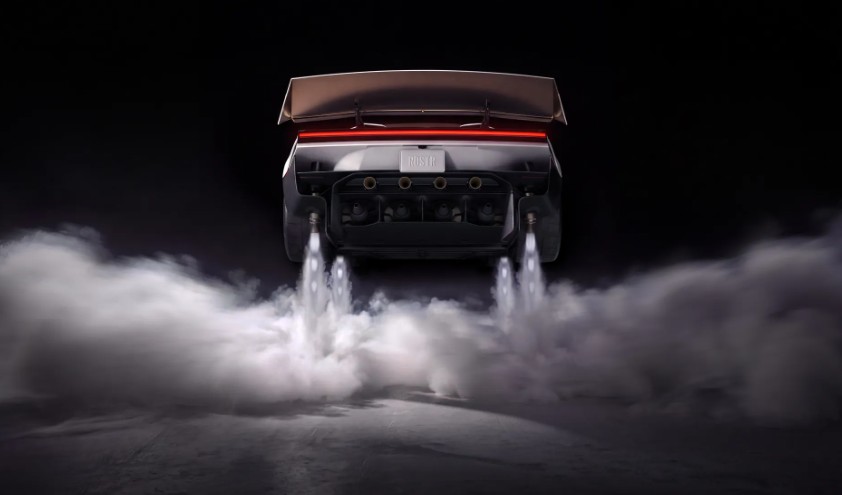
Tesla’s long-delayed Roadster 2 is designed to blur the line between electric hypercar and rocket-powered experiment. At its unveiling at SpaceX’s facility in McGregor, Texas, the prototype accelerated from 0 to 60 mph in under a second, climbed a steep ramp, traveled upside down, flipped through the air, and used onboard thrusters to soften its landing, tells Wired.com (full article available to subscribers).
The engineering behind the demonstration combines extreme traction with compressed-gas propulsion. Four 20-kilowatt fans underneath the vehicle create suction, while deployable skirts help seal the car against the road. This active downforce system can generate strong grip even at low speeds, when conventional aerodynamic wings are less effective. Tesla vehicle engineering head Lars Moravy says the setup can produce more than 2 g during cornering and acceleration below 50 mph.
For additional thrust, Tesla worked with SpaceX on a cold-gas system using highly pressurized nitrogen. A 200-liter carbon-overwrapped pressure vessel behind the seats feeds rear thrusters that can deliver more than 80 kilonewtons of thrust. Combined with the suction system, the technology enables the claimed sub-second acceleration, exposing occupants to forces of up to 5 g.
Tesla plans several Roadster configurations. The Performance version will use the suction system without thrusters, reaching 60 mph in 1.6 seconds and a top speed of 210 mph. The Thrust version adds propulsion and raises top speed to 230 mph. A flight configuration requires another 400-liter nitrogen tank and six additional thrusters, eliminating the passenger seat.
Practical challenges remain. Refilling the 600-liter nitrogen system currently takes 6–7 hours, although Tesla aims to reduce that to 30 minutes. Production is targeted for 2028, years after the original 2020 delivery promise, while potential aviation regulations add another layer of uncertainty. For now, the Roadster 2 is as much an engineering demonstration as a production-car proposition for Tesla itself.
