

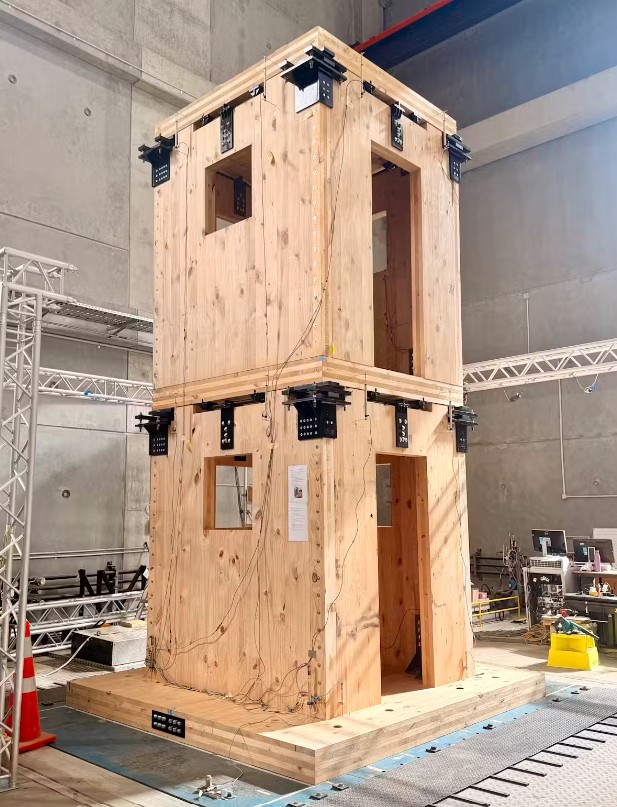
Earthquake-resistant design has traditionally focused on preventing buildings from collapsing and protecting occupants during seismic events. While this approach has saved countless lives, many structures still suffer extensive damage that can leave them unusable for months or even years. The Conversation article examines a promising engineering solution aimed at improving not only life safety but also post-earthquake functionality and recovery.
The research centers on a structural technology known as a self-centering system. Unlike conventional buildings that absorb earthquake energy through permanent deformation and damage, self-centering structures are designed to return to their original position after shaking stops. This approach reduces residual drift, the permanent leaning or displacement that often renders buildings unsafe or economically impractical to repair after an earthquake.
To evaluate the concept, researchers conducted large-scale testing that simulated realistic seismic conditions. The tests examined how a building equipped with self-centering components would respond to strong ground motions. The system uses specially engineered connections and energy-dissipating devices that allow the structure to move during an earthquake while limiting permanent damage. After the shaking ends, restoring forces pull the building back toward its original alignment.
The results demonstrated that the technology can significantly reduce structural damage and improve resilience. Rather than requiring extensive repairs, buildings using this approach could potentially remain operational or return to service much more quickly. This capability is particularly valuable for critical facilities such as hospitals, emergency response centers, schools, and commercial buildings, where prolonged downtime can have significant social and economic consequences.
The article emphasizes that resilience extends beyond surviving an earthquake. Modern engineering increasingly focuses on maintaining functionality, reducing repair costs, and minimizing disruption to communities. As urban populations grow and infrastructure ages, these considerations are becoming central to seismic design strategies.
By testing self-centering technology under realistic conditions, researchers are helping to advance a new generation of earthquake-resistant buildings. The work suggests that future structures may not only protect lives during seismic events but also recover rapidly afterward, reducing long-term economic losses and strengthening community resilience in earthquake-prone regions.
