

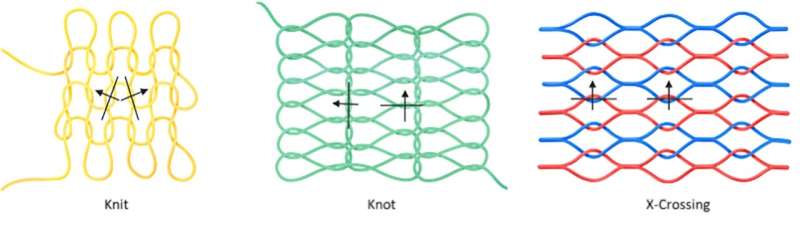
Researchers at the École Polytechnique Fédérale de Lausanne have developed a new type of robotic textile actuator that combines strength, flexibility, and lightweight construction in ways previously out of reach for soft robotic fabrics, tells Tech Xplore. The advance centers on how shape-memory alloy (SMA) fibers are woven into the fabric. In standard knitted or knotted textiles, these metal threads often pull against one another when they contract under heat, canceling out a significant portion of their force. The EPFL team solved this by aligning every fiber crossing in the X-Crossing geometry, so each contraction works in concert with the others. That alignment means the fabric can reliably produce a strong, constructive force rather than self-negating tension.
This geometric arrangement makes the fabric both powerful and compliant. A lightweight sample weighing just 4.5 grams can lift about 1 kilogram while contracting up to 50% of its length. The same structure stretches up to 160% of its original length, which is key for wearables that must conform to the body without restricting movement. The team integrated the textile into prototype wearable systems to demonstrate practical uses. One prototype acted as an assistance sleeve for elbow bending, lifting a load through a smooth, controlled motion. Another used the actuators for on-body compression, a capability useful for medical sleeves or athletic garments where dynamic pressure is beneficial.
Because the actuation comes from the fabric itself rather than rigid motors or bulky hardware, this approach has promise for comfortable, unobtrusive wearable robotics. It could support muscle movement for people who need assistance, enhance athletic performance, or provide adaptive compression in medical applications without compromising comfort. The work also highlights how small design changes, in this case, geometric alignment of fibers, can unlock performance improvements that were previously limited by the inherent contradictions of traditional textile structures. The research paves a path toward functional garments that blend seamlessly with human movement.
