

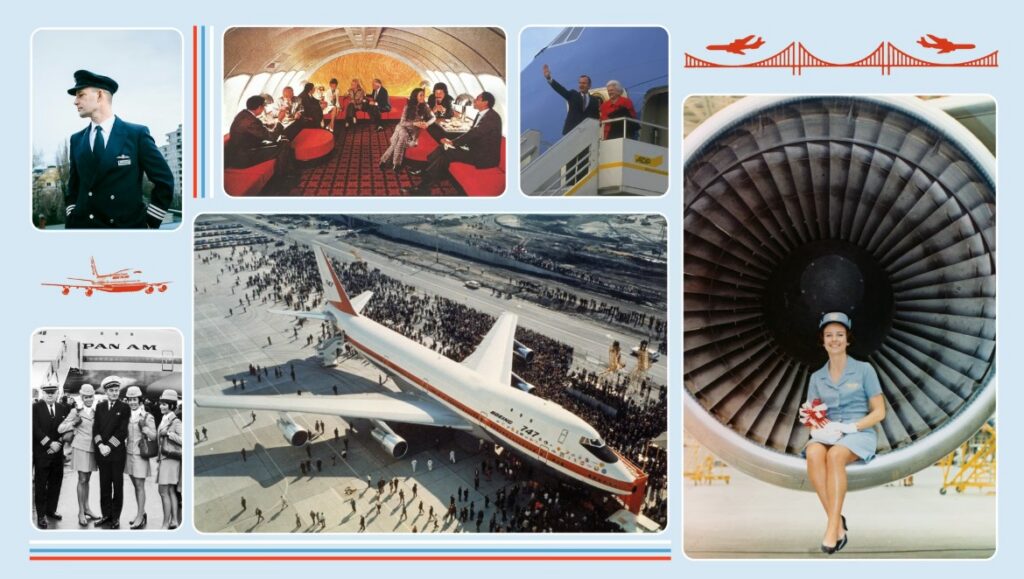
The Boeing 747, known as the Queen of the Skies, transformed global travel and became one of the most recognizable symbols of the Jet Age. The Atlantic article traces the aircraft’s rise, cultural significance, and gradual disappearance, arguing that its retirement marks the end of a broader era defined by optimism, technological ambition, and a more human experience of flight.
Introduced in 1970, the 747 emerged from one of Boeing’s most ambitious engineering projects. Designed to carry nearly 500 passengers across oceans and continents, it dramatically expanded access to international travel. Its immense size, distinctive hump-backed profile, and long-range capabilities helped shrink the world, making global mobility available to millions. The aircraft became a symbol of American innovation and confidence, reflecting a period when large-scale technological projects were pursued despite enormous financial risks.
The article emphasizes that the 747 was more than a means of transportation. Early versions featured cocktail lounges, spacious cabins, generous legroom, and social spaces that encouraged interaction among passengers. Flying was treated as an experience rather than simply a method of getting from one destination to another. Flight attendants recall an atmosphere in which passengers mingled, celebrated special occasions, and viewed air travel as something memorable and enjoyable.
Over time, economic pressures, deregulation, rising fuel costs, and changing airline business models altered the character of commercial aviation. Airlines removed lounges, increased seating density, and prioritized efficiency over comfort. The 747 itself became a victim of these changes, as newer twin-engine aircraft offered lower operating costs while serving similar routes. Gradually, airlines retired their jumbo jets, sending many to aircraft storage facilities in Arizona’s desert.
The aircraft also played a role beyond commercial travel. It transported refugees, carried the space shuttle, and served as Air Force One, reinforcing its status as a symbol of national identity and global influence. Yet even that legacy now appears uncertain amid delays in replacing the presidential fleet and broader challenges facing Boeing.
Ultimately, the article presents the 747 as more than an airplane. Its decline reflects the fading of a vision of air travel centered on wonder, social connection, and shared progress. As the last examples are dismantled or preserved in museums, the Queen of the Skies stands as a reminder of a period when technological achievement inspired not only movement but also aspiration.
